Shop
 Grade workbooks


Fine motor · Tracing lines · 3 free PDFs

Tracing lines
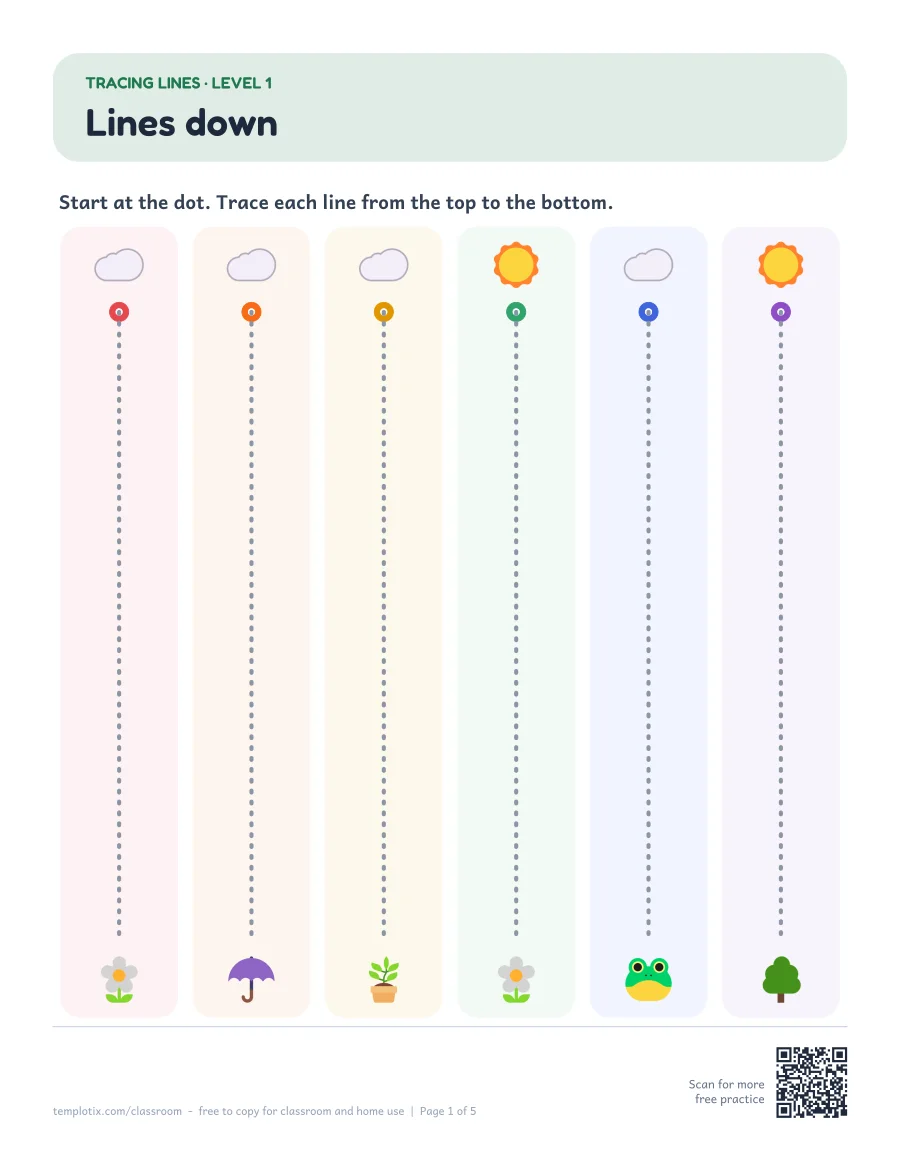
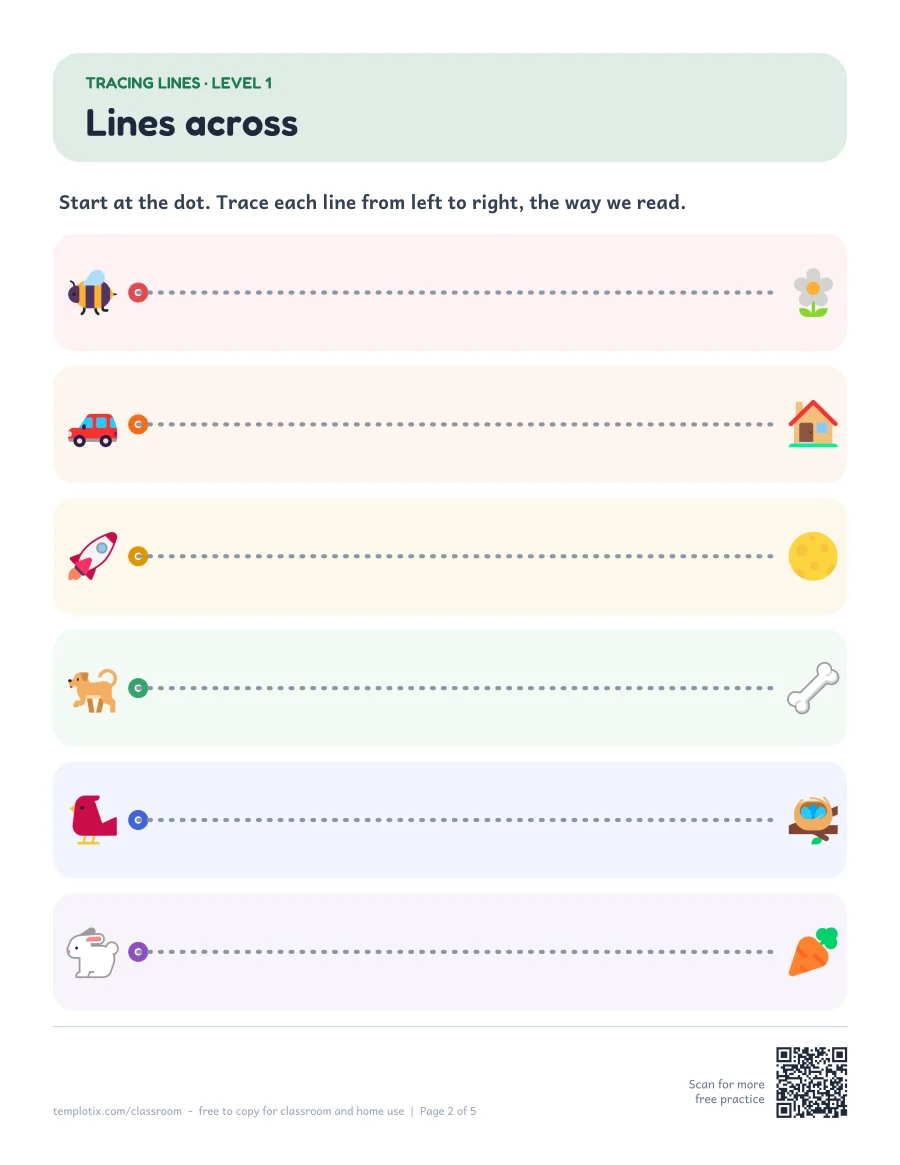
Before children write letters, they learn the strokes that letters are made of: lines down, lines across, slants, curves and loops. On these pages every line runs from a start dot to a picture, so the direction is always clear: top to bottom and left to right, the same way we write.
Level 1 · Preschool and kindergarten
Tracing straight lines
Lines down, lines across, slanted lines and corners: the strokes that every letter is built from.
Level 2 · Preschool to 1st grade
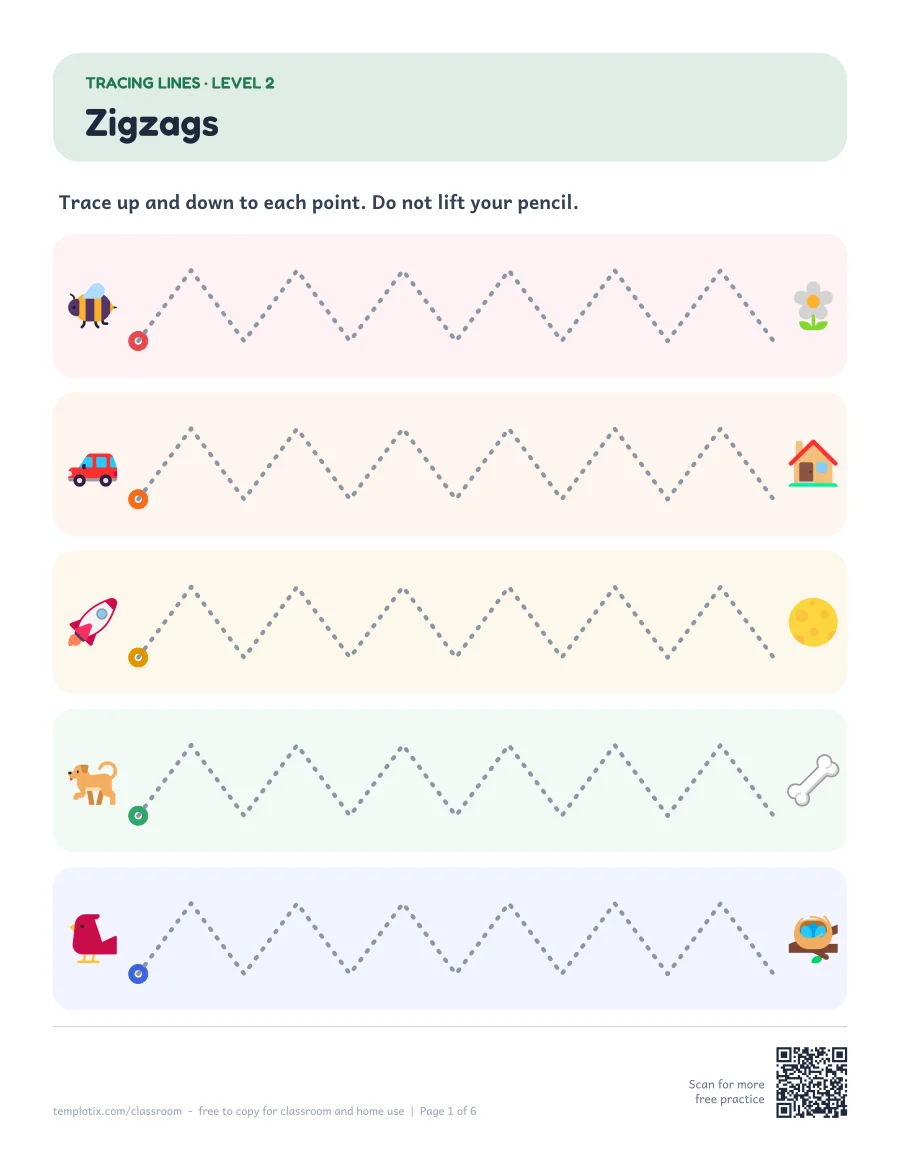
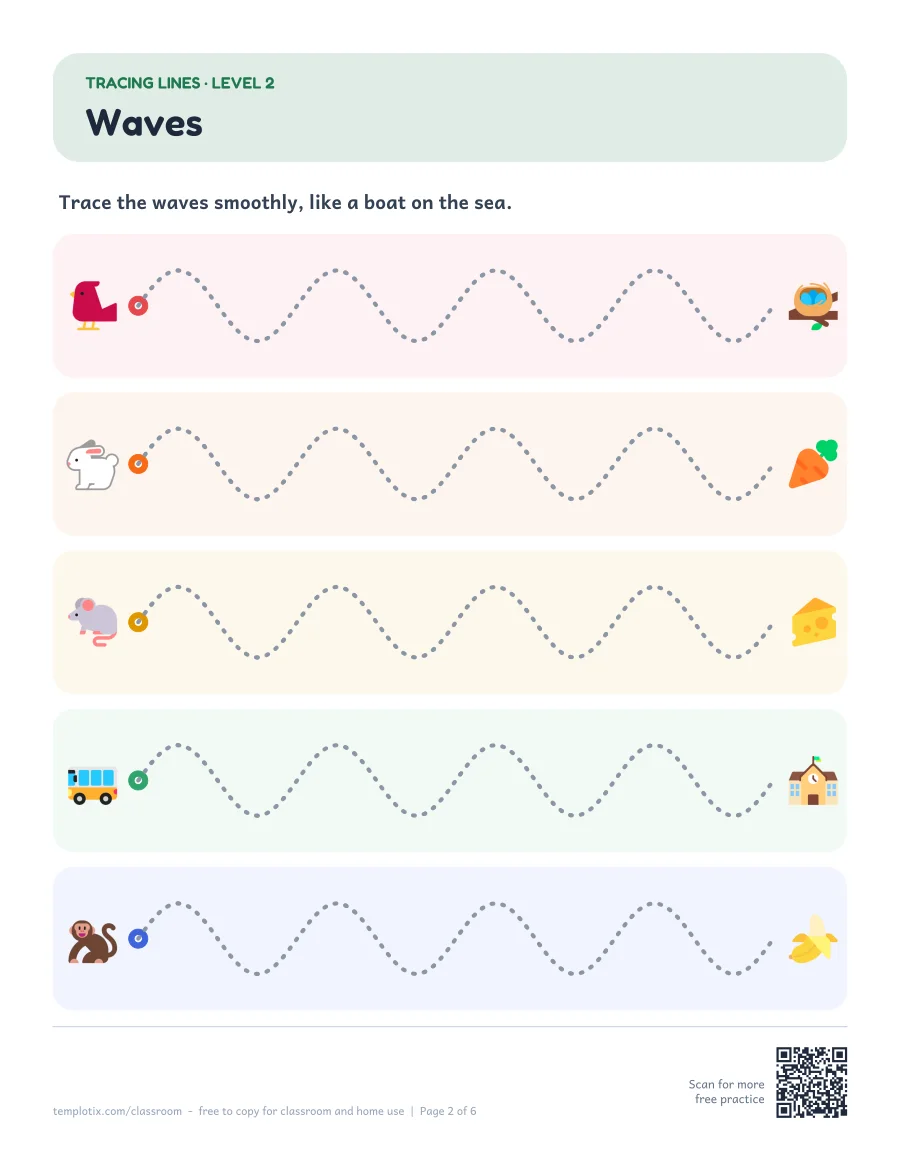
Tracing curves, waves and zigzags
Zigzags, waves, hills and loops: the curved and pointed strokes used in letters such as m, n, s, v, w and e.
Shapes · Preschool to 1st grade
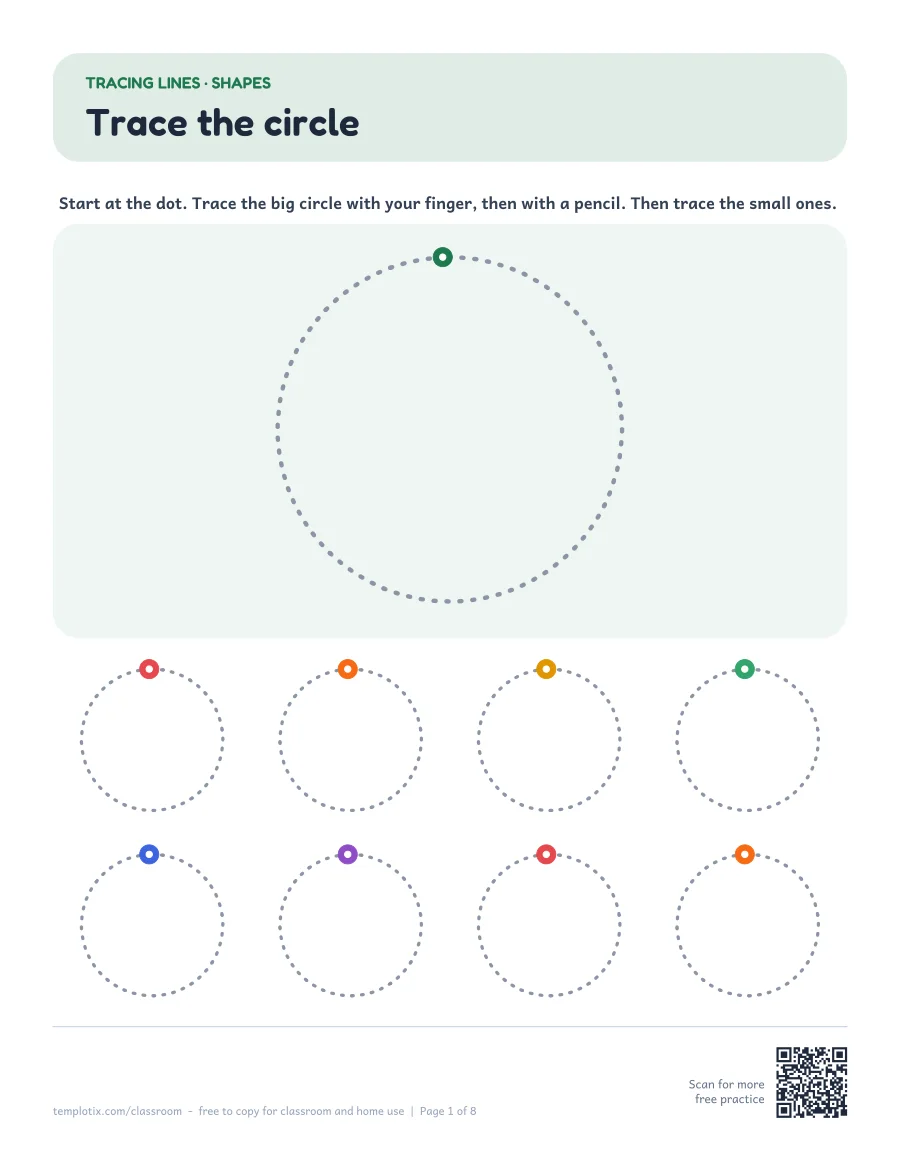
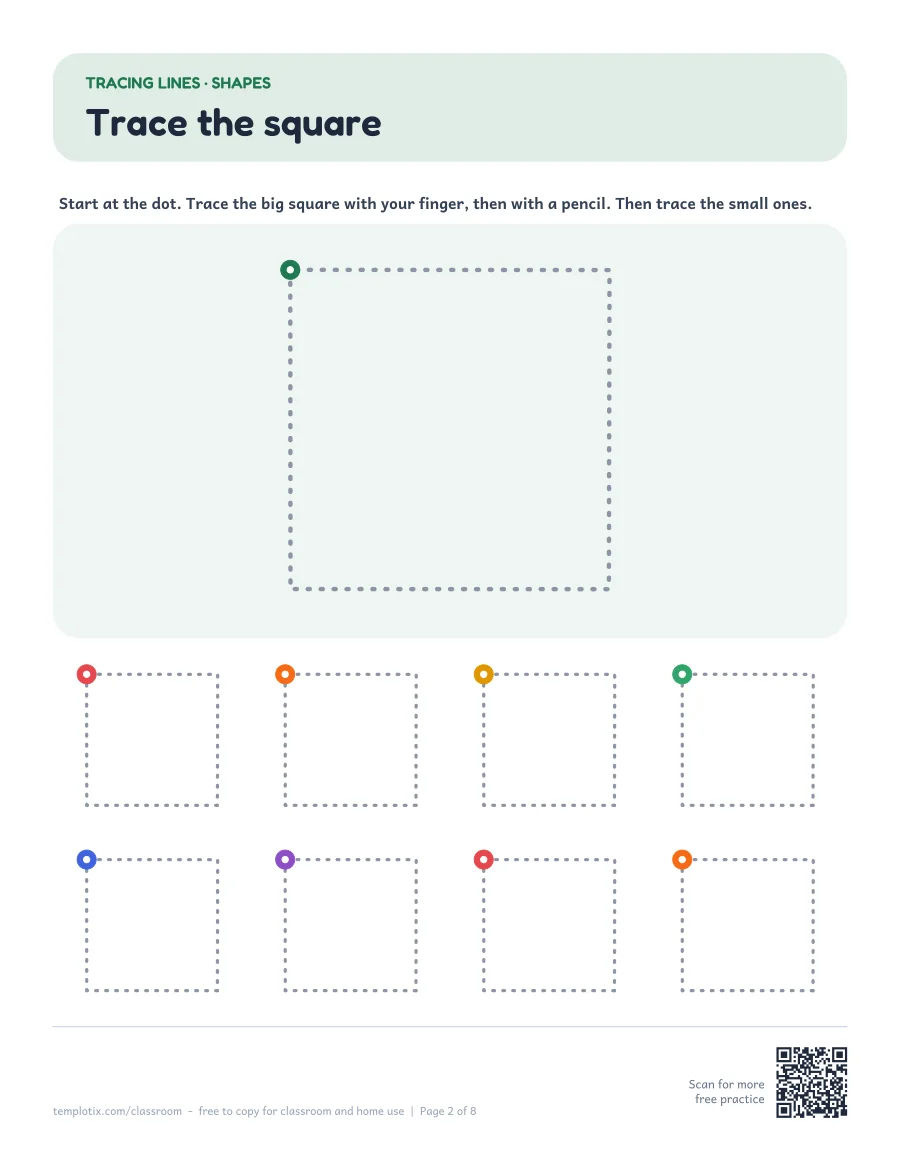
Tracing shapes
One page each for the circle, square, triangle, rectangle, oval, diamond, star and heart: one big shape, then eight small ones.
How to use these pages
- Trace the line with a finger first, from the dot to the picture.
- Then trace it with a crayon or a short pencil. Short pencils help the right grip.
- Go slowly and stay on the dots. Try not to lift the pencil before the picture.
- Trace the same page again in another color for extra practice.
What children practice
 What children practice
- Pencil grip and control
- Writing from left to right and top to bottom
- The strokes used in letters and numbers
- Recognizing and drawing basic shapes
More fine motor practice
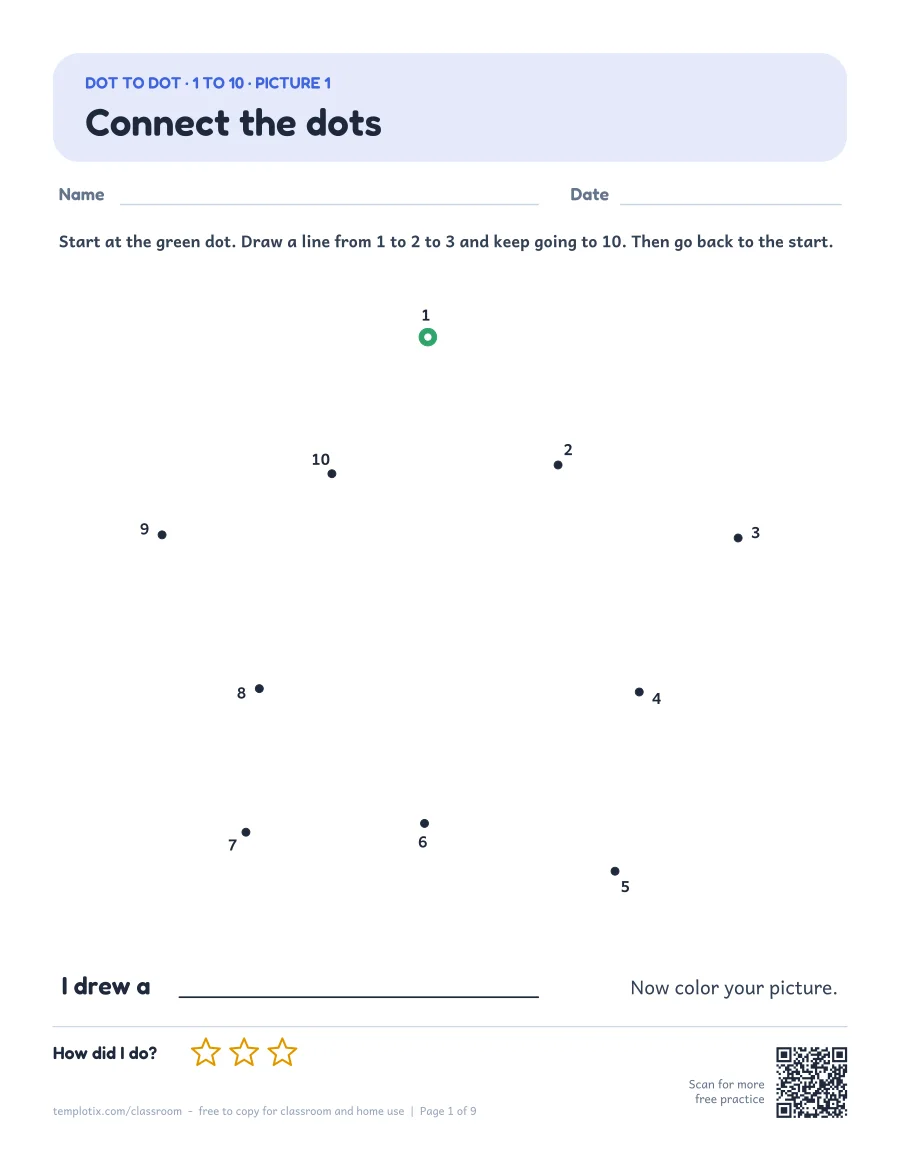 Dot to dot printables5 PDFs · 41 pages
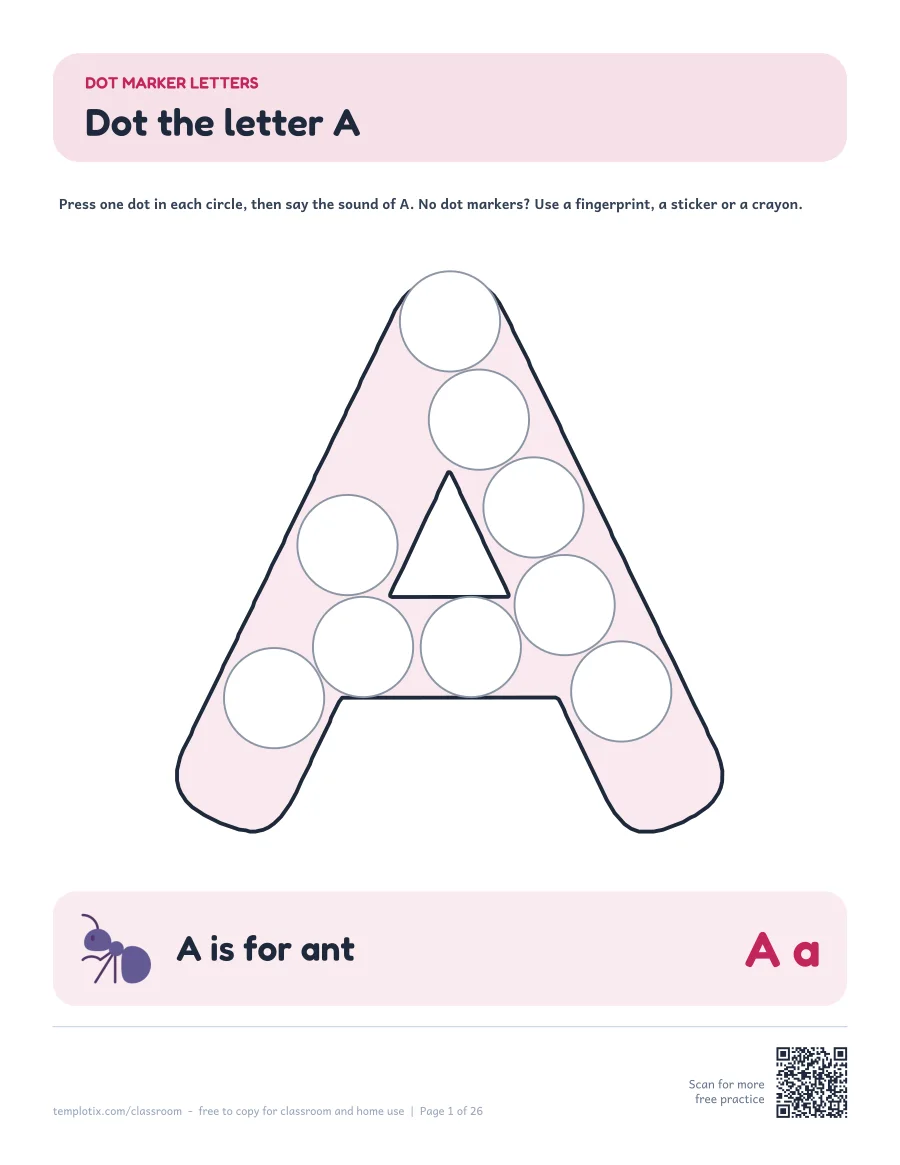 Dot marker printables3 PDFs · 46 pages
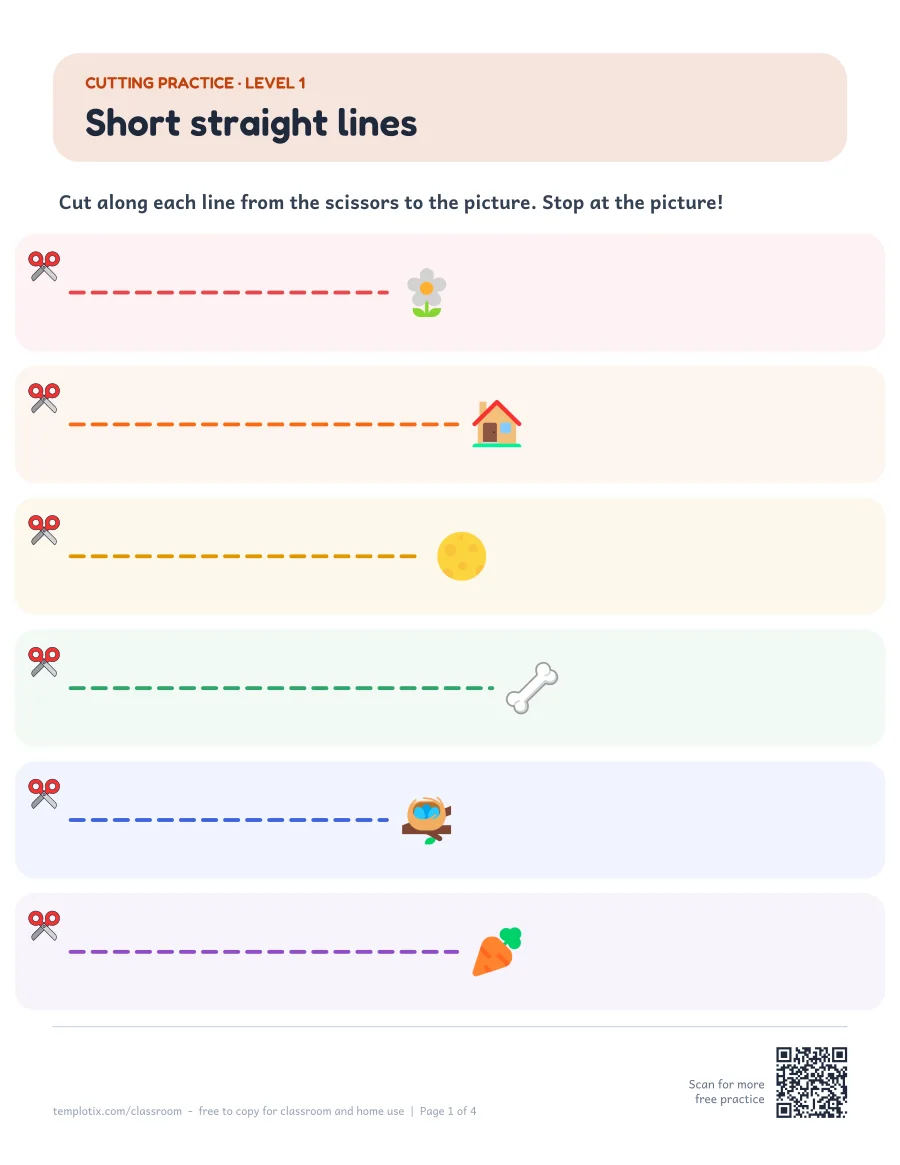 Cutting practice worksheets3 PDFs · 14 pages
Common questions
What are pre-writing strokes?
They are the simple lines that make up letters and numbers: a line down, a line across, a circle, a cross, slanted lines, a square and a triangle. Children usually learn them in about that order between ages 2 and 5.
What age are tracing lines worksheets for?
Most children are ready for straight lines at about age 3, and for zigzags, waves and shapes at 4 to 5. They are a good warm-up before letter tracing in kindergarten.
What comes after tracing lines?
Tracing shapes, then letters and numbers. When these pages are easy, move on to the alphabet and number tracing pages.
Should my child use a pencil or a crayon?
Either. Thick crayons and short pencils are easier for small hands, and a short pencil encourages a three-finger grip.
All fine motor worksheetsAlphabet tracing worksheetsNumber tracing worksheetsName tracing
Free to print and copy for classroom and home use. 19 pages in all. Pictures based on Microsoft Fluent Emoji (MIT license).