Shop
 Grade workbooks


Classroom · Reading
worksheets and Dolch word lists
Free, colorful worksheets for the most common words in early reading, the full Dolch list of 220 words by level, a star tracker and a certificate. Every PDF comes in color and in an ink-saving black-and-white version.
Sight word worksheets
 Sight word worksheets
Each worksheet is three pages. Page 1: read the word, trace it, rainbow-write it and write it on your own. Page 2: find it among look-alike words, spell it, read it in picture sentences and write it to finish sentences. Page 3: the answer key with a teaching tip.
Tracker and certificate
 Tracker and certificate
Color a star each day a word is read without help, then celebrate with the certificate once every row is full.
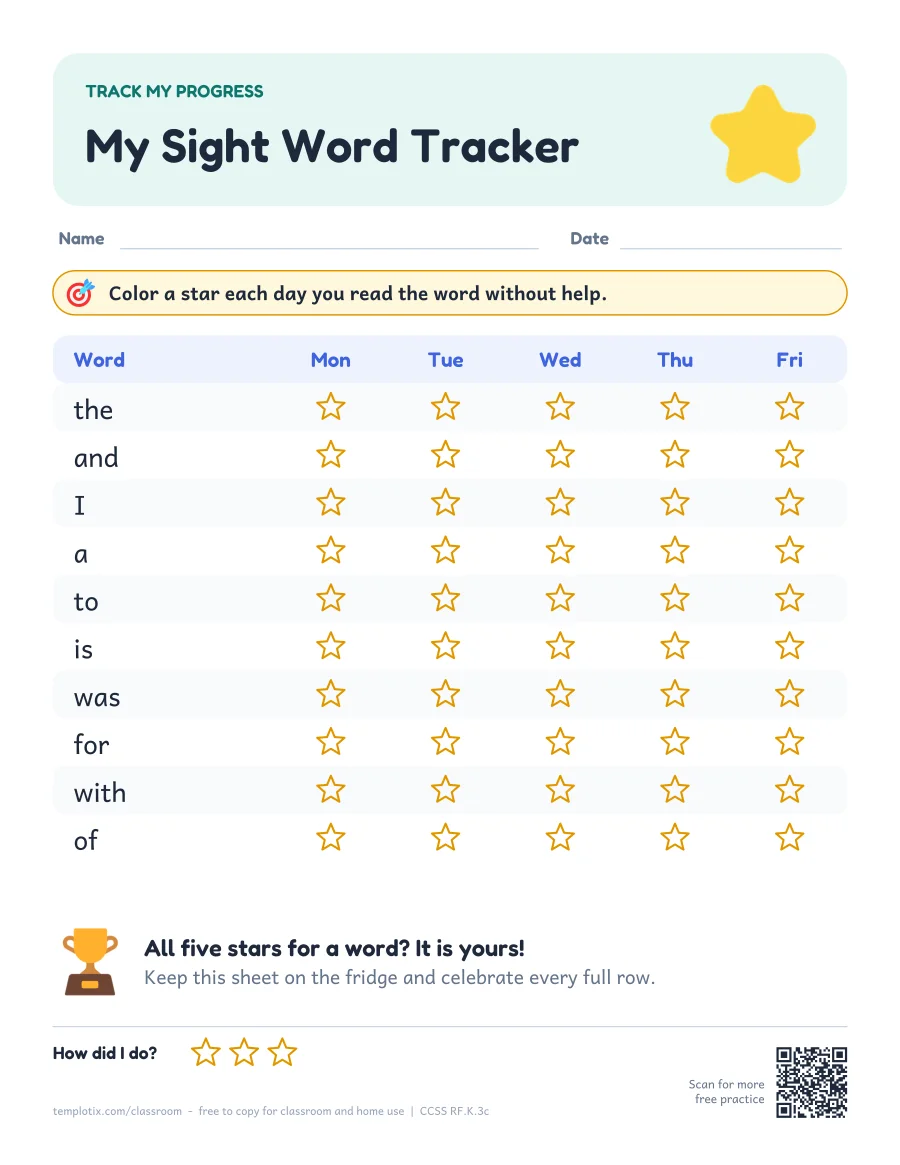
My Sight Word Tracker
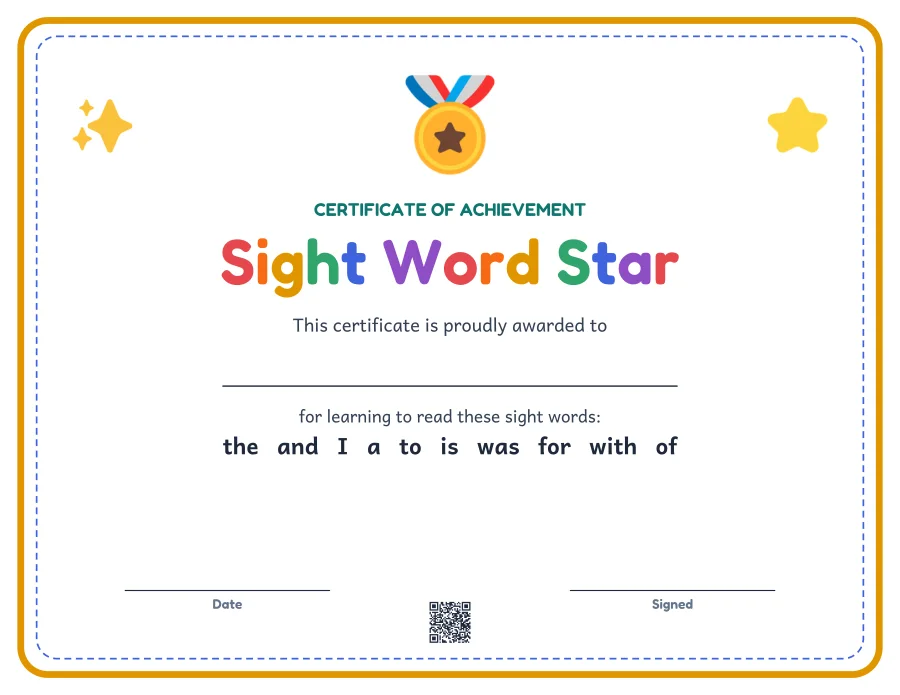
Sight Word Star certificate
The Dolch sight word lists
 The Dolch sight word lists
All 220 Dolch words, in the five levels they are usually taught, with a check box beside every word. Grade levels are the common convention, not a rule. Words in green have their own worksheet.
Pre-primer · Pre-K and early kindergarten · 40 words
Primer · Kindergarten · 52 words
First grade · Grade 1 · 41 words
- after
- again
- an
- any
- as
- ask
- by
- could
- every
- fly
- from
- give
- going
- had
- has
- her
- him
- his
- how
- just
- know
- let
- live
- may
- of
- old
- once
- open
- over
- put
- round
- some
- stop
- take
- thank
- them
- then
- think
- walk
- were
- when
Second grade · Grade 2 · 46 words
- always
- around
- because
- been
- before
- best
- both
- buy
- call
- cold
- does
- don't
- fast
- first
- five
- found
- gave
- goes
- green
- its
- made
- many
- off
- or
- pull
- read
- right
- sing
- sit
- sleep
- tell
- their
- these
- those
- upon
- us
- use
- very
- wash
- which
- why
- wish
- work
- would
- write
- your
Third grade · Grade 3 · 41 words
- about
- better
- bring
- carry
- clean
- cut
- done
- draw
- drink
- eight
- fall
- far
- full
- got
- grow
- hold
- hot
- hurt
- if
- keep
- kind
- laugh
- light
- long
- much
- myself
- never
- only
- own
- pick
- seven
- shall
- show
- six
- small
- start
- ten
- today
- together
- try
- warm
Common questions
What are sight words?
Sight words are the very common words children should recognize instantly, without sounding them out. Many of them, such as "the", "was" and "of", do not follow regular phonics patterns, so instant recognition is the practical way to read them fluently.
What is the difference between Dolch and Fry sight words?
The Dolch list is 220 high-frequency "service words" (nouns excluded) grouped into five levels from pre-primer to third grade. The Fry list is 1,000 words ranked by how often they appear in reading material, usually taught 100 at a time. The two overlap heavily at the start: every word with a worksheet here is on both.
How many sight words should a kindergartener know?
Expectations vary by school and state, so check your own curriculum. A common target is the 40 pre-primer words and much of the 52-word primer list by the end of kindergarten, but steady progress matters more than hitting a number.
How should I use these worksheets?
One word at a time. Introduce the word aloud, do page 1 together (read, trace, write), then let the child do page 2 more independently. Revisit earlier words often; short daily practice works better than one long session.