Shop
 Grade workbooks


 Free
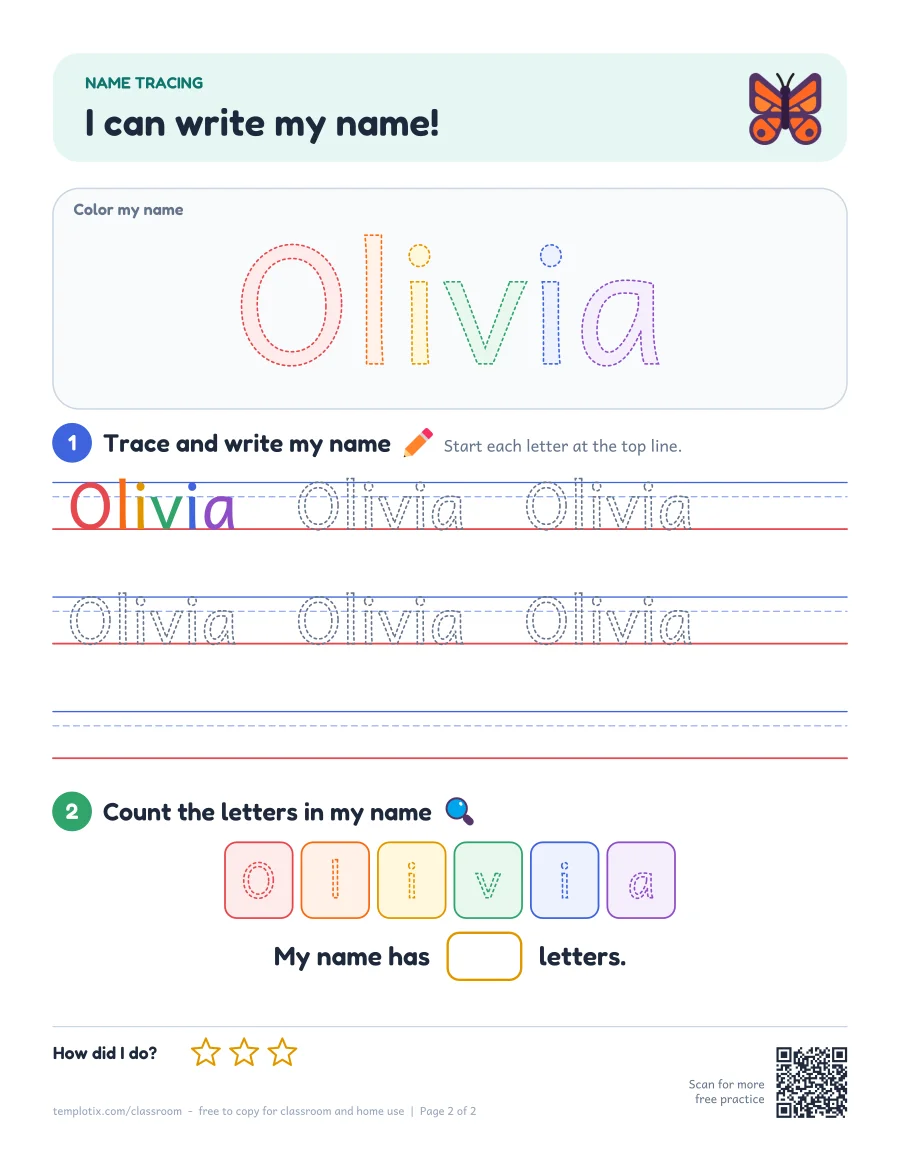
What is on each page
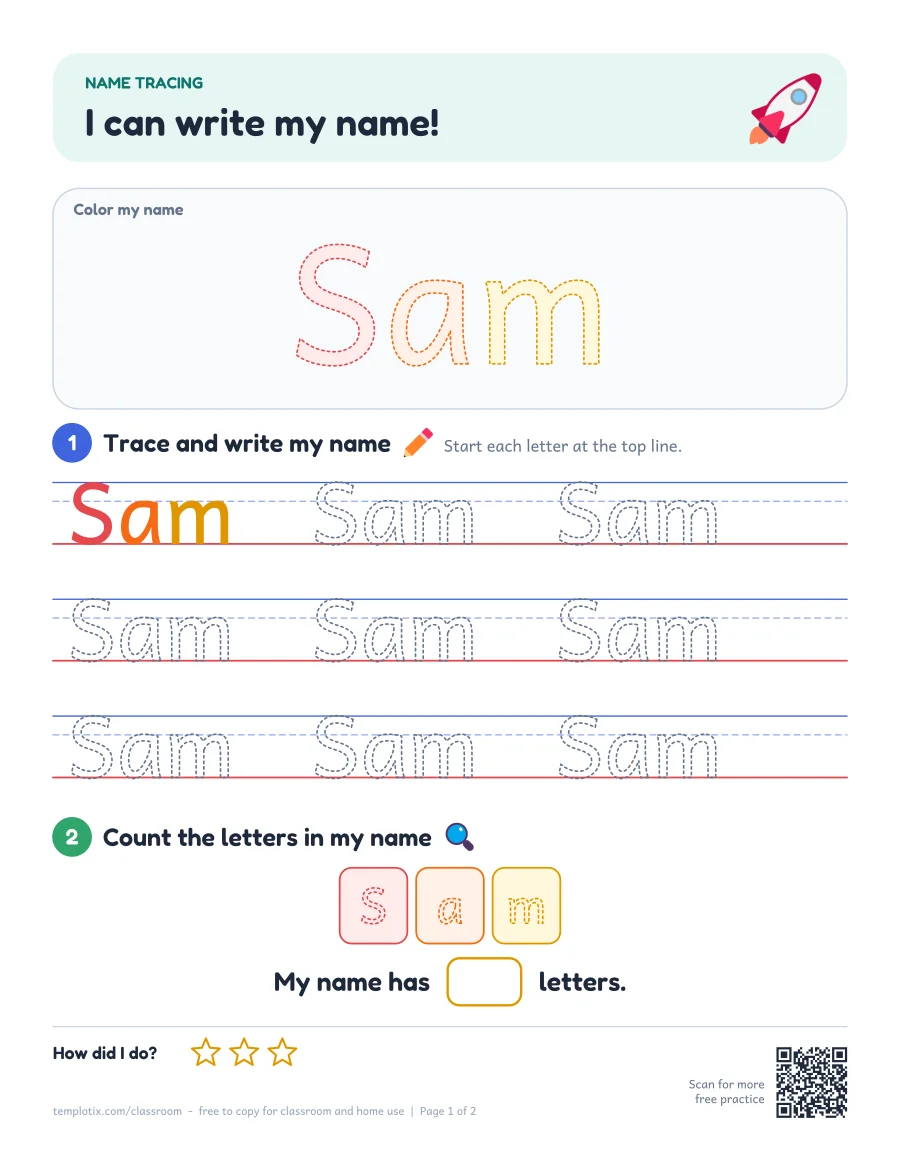
- 1. Color the big nameChildren trace the giant dotted letters with a finger first, then color them in. It builds the shape of every letter before the pencil work.
- 2. Trace and writeA rainbow model shows the name, then the dotted rows fade to empty rows. Remind them to start each letter at the top line.
- 3. Count the lettersOne box for each letter to trace, then "My name has __ letters." A quick bridge from letters to numbers.


Tips for teaching a child their name
 Tips for teaching a child their name
- One page a day is plenty. Little hands tire quickly. A few minutes of careful tracing beats a rushed page.
- Capital first, then lowercase. Most names are written with one capital letter and the rest lowercase, the way children will see them in books.
- Make it real. Ask children to write their name on their drawings, their cubby label and their birthday cards.
- Laminate for reuse. Slip a page into a sheet protector and use a dry-erase marker, so the same page lasts all week.
- Learn the letters too. The alphabet worksheets practice each letter on its own, with a 28-page tracing book.
Common questions
Is the name tracing maker free?
Yes, completely. There is no account, no watermark and no limit on how many sheets you make. The PDF is built in your browser, so the names you type never leave your computer.
Can I make name tracing sheets for my whole class?
Yes. Type or paste your class list with one name on each line (up to 30) and download one PDF with a page for every child. Each page has that child’s name in the big coloring panel, the tracing rows and the letter boxes.
Should a child learn to write their name in capitals or lowercase?
Teach it the way they will see it in books: a capital first letter and lowercase for the rest (Sam, not SAM). Children who are just starting sometimes find capitals easier, so the maker also offers all capitals. Switch to the capital-first version as soon as they are ready.
Which practice style should I choose?
"Trace" is for children who are new to holding a pencil: every row is dotted. "Trace, then write alone" ends with empty rows so children try on their own. "Trace a row, write a row" puts an empty row under each tracing row, for children who know most of their letters.
Can I use first and last names?
Yes. Type the full name on one line, up to 24 letters. The letters shrink to fit the row, and long names automatically use a smaller size so the whole name fits.
What does "Count the letters" do?
It adds a row of boxes, one for each letter of the name, to trace and count, and a box to write how many letters are in the name. It is a simple first lesson in counting and in noticing letters.