 Shop
 Grade workbooks


Classroom · Multiplication
chart 1 to 12
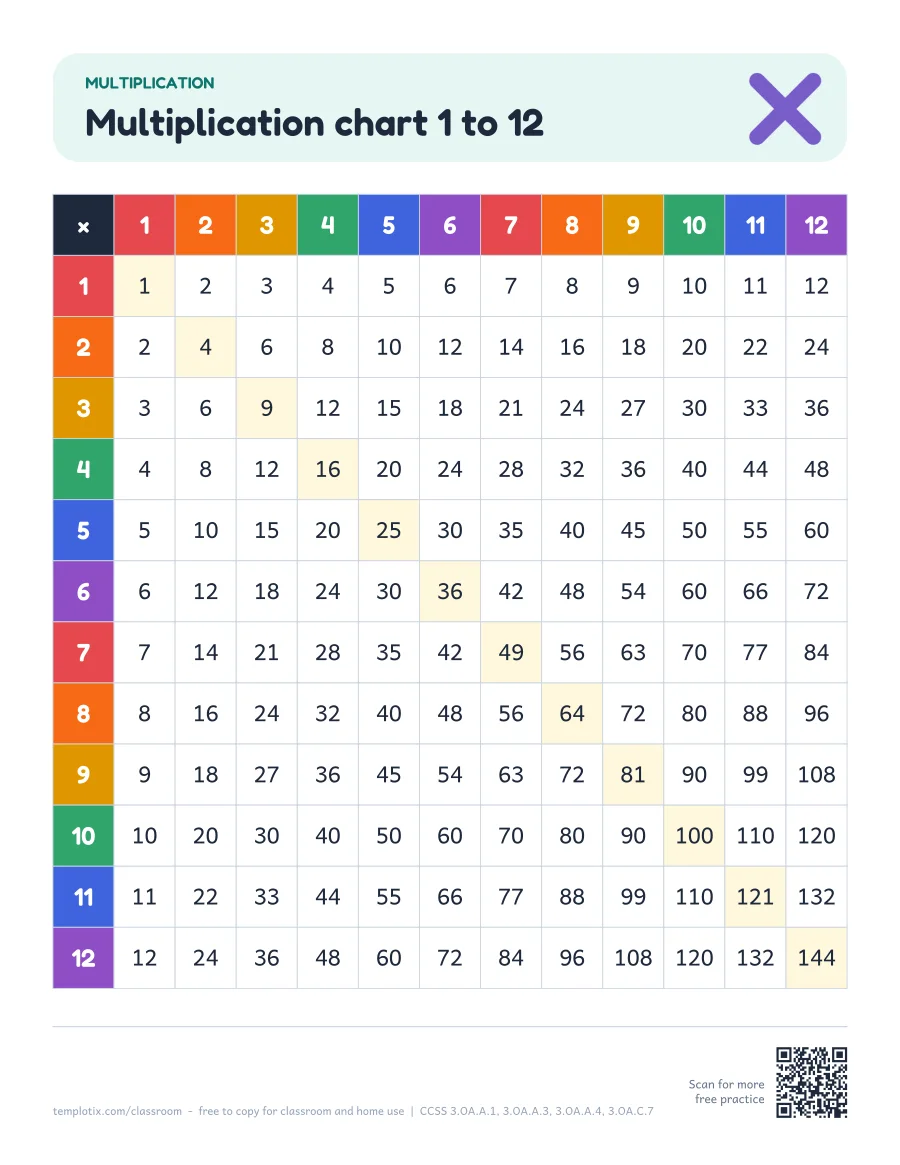
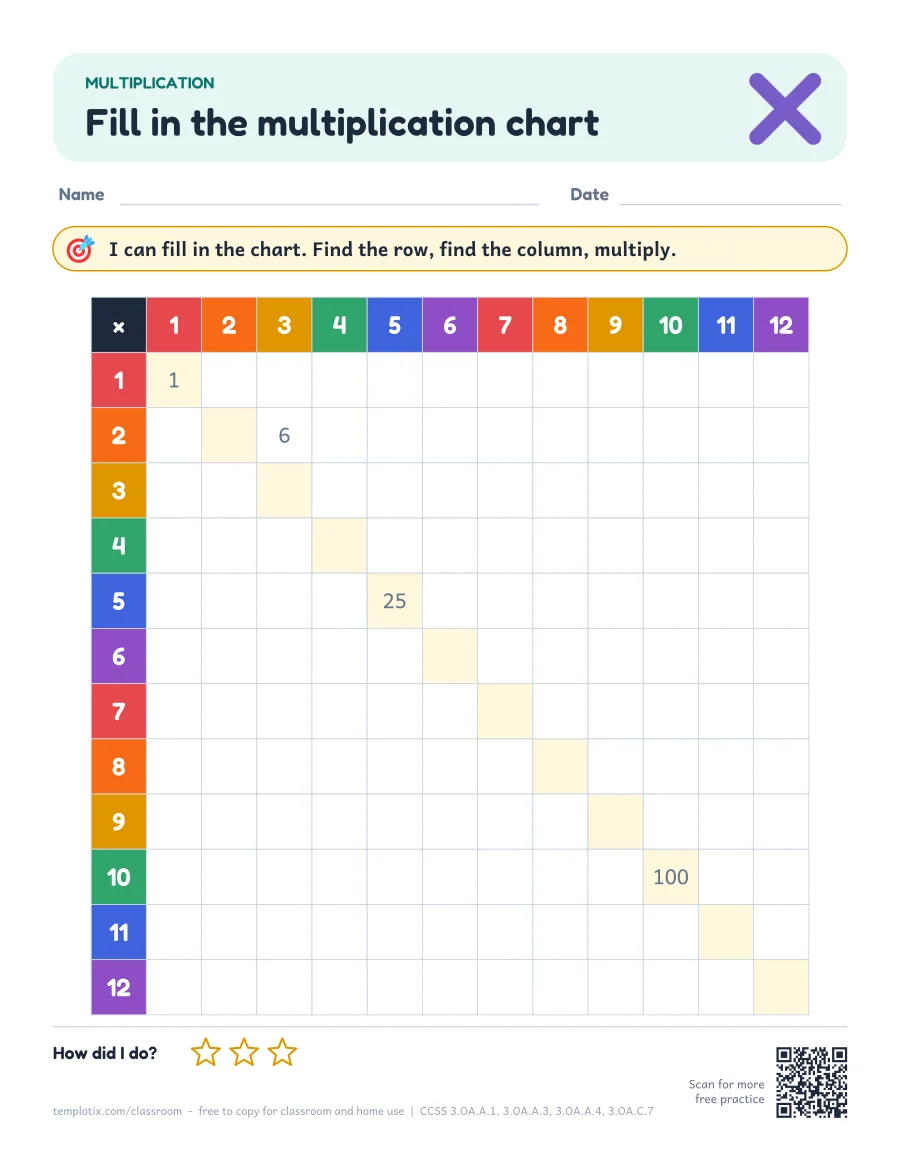
Every fact from 1 × 1 to 12 × 12 on one page. Print it for a desk or the wall, or print the blank chart for children to fill in.
Multiplication chart
 Multiplication chart
Blank chart to fill in
| × | 1 | 2 | 3 | 4 | 5 | 6 | 7 | 8 | 9 | 10 | 11 | 12 |
|---|---|---|---|---|---|---|---|---|---|---|---|---|
| 1 | 1 | 2 | 3 | 4 | 5 | 6 | 7 | 8 | 9 | 10 | 11 | 12 |
| 2 | 2 | 4 | 6 | 8 | 10 | 12 | 14 | 16 | 18 | 20 | 22 | 24 |
| 3 | 3 | 6 | 9 | 12 | 15 | 18 | 21 | 24 | 27 | 30 | 33 | 36 |
| 4 | 4 | 8 | 12 | 16 | 20 | 24 | 28 | 32 | 36 | 40 | 44 | 48 |
| 5 | 5 | 10 | 15 | 20 | 25 | 30 | 35 | 40 | 45 | 50 | 55 | 60 |
| 6 | 6 | 12 | 18 | 24 | 30 | 36 | 42 | 48 | 54 | 60 | 66 | 72 |
| 7 | 7 | 14 | 21 | 28 | 35 | 42 | 49 | 56 | 63 | 70 | 77 | 84 |
| 8 | 8 | 16 | 24 | 32 | 40 | 48 | 56 | 64 | 72 | 80 | 88 | 96 |
| 9 | 9 | 18 | 27 | 36 | 45 | 54 | 63 | 72 | 81 | 90 | 99 | 108 |
| 10 | 10 | 20 | 30 | 40 | 50 | 60 | 70 | 80 | 90 | 100 | 110 | 120 |
| 11 | 11 | 22 | 33 | 44 | 55 | 66 | 77 | 88 | 99 | 110 | 121 | 132 |
| 12 | 12 | 24 | 36 | 48 | 60 | 72 | 84 | 96 | 108 | 120 | 132 | 144 |
Patterns to look for
- The mirror line. The chart is the same on both sides of the yellow diagonal, because 3 × 8 = 8 × 3.
- Square numbers. The diagonal holds 1, 4, 9, 16, 25 and so on: a number times itself.
- Doubles. Row 4 is row 2 doubled, and row 8 is row 4 doubled.
- Fives and tens. Row 5 ends in 5 or 0, and row 10 always ends in 0.
- The nines. From 9 to 90, the digits add up to 9: 18, 27, 36, 45.
Ready to practice? Each table has its own pack, from the 2 times table to the 12 times table, and the worksheet maker builds mixed drills.
Common questions
How do you read a multiplication chart?
Find one number in the top row and the other in the left column. Follow the row across and the column down: the square where they meet is the answer. For 4 × 7, go along row 4 to column 7 and you reach 28.
Why are some squares highlighted?
The highlighted squares on the diagonal are the square numbers: 1 × 1, 2 × 2, 3 × 3 and so on up to 12 × 12 = 144. The chart is a mirror image on either side of that line, because 4 × 7 and 7 × 4 have the same answer.
How do I use the blank multiplication chart?
Children fill it in one row at a time, starting with the easy tables (1, 2, 5 and 10), then check against the full chart. Filling in a whole chart from memory is a good end-of-term check.
Is it all right for children to use a multiplication chart?
Yes, while they are learning. Looking up facts and noticing patterns builds understanding. As facts become familiar, move to practice without the chart so they are remembered.