Shop
 Grade workbooks


Classroom · Math · CCSS K.G.A.2, K.G.A.3, K.G.B.4, 1.G.A.1, 2.G.A.1, 3.G.A.1
worksheets for kindergarten to 3rd grade
Flat and solid shapes from kindergarten to 3rd grade: name circles, squares, triangles and hexagons, find shapes in everyday things, tell 2D from 3D, count sides and vertices, count the faces, edges and vertices of solids, and sort quadrilaterals. Every pack ends with an answer key, and the shapes stay crisp outlines in the ink saver, ready to color.
- 2D shapesKindergarten
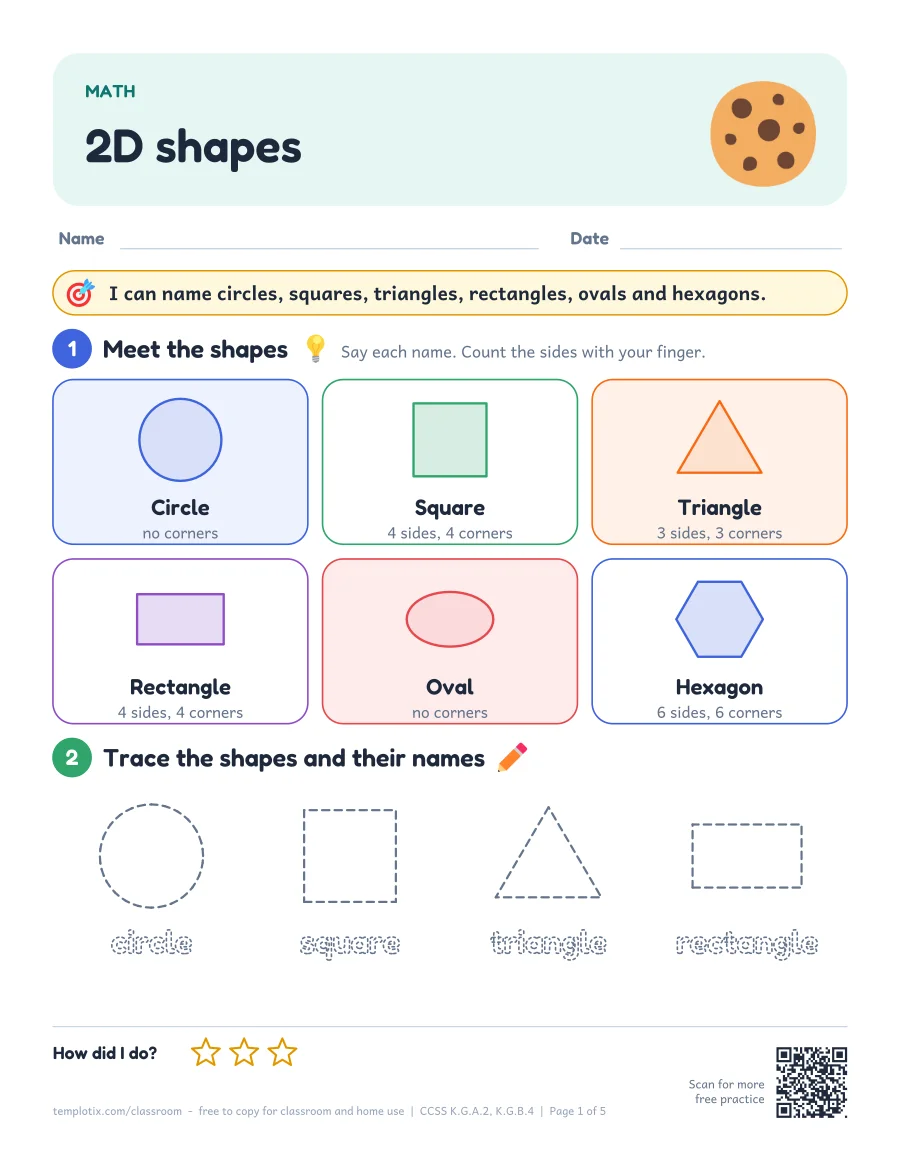
Look at the sides and the corners. A circle and an oval are round, with no corners. A triangle has 3 sides. A square has 4 equal sides. A rectangle has 4 sides, two long and two short. A hexagon has 6 sides.
- 3D shapesKindergarten and 1st grade
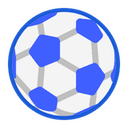
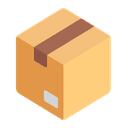
Solid shapes take up space. A sphere is round like a ball. A cube has 6 square faces. A cylinder has 2 circle faces and a curved side, like a can. A cone has 1 circle face and a point. A rectangular prism is a box shape.
- Sides and vertices1st and 2nd grade
A side is a straight line on the edge of a shape. A vertex is a corner, where two sides meet. Most flat shapes have the same number of sides and vertices: a pentagon has 5 sides and 5 vertices.
- Faces, edges and vertices2nd grade
A face is a flat surface. An edge is where two faces meet. A vertex is a corner, where edges meet. A cube has 6 faces, 12 edges and 8 vertices. Dashed lines in a drawing show the edges at the back.
- Quadrilaterals3rd grade
A quadrilateral is any flat shape with 4 straight sides and 4 vertices. Some have special names. A square has 4 equal sides and 4 right angles. A rectangle has 4 right angles. A rhombus has 4 equal sides. A parallelogram has 2 pairs of parallel sides, and a trapezoid has 1 pair.


2D and 3D shapes chart
 2D and 3D shapes chart
Ten flat shapes and six solid shapes with their names, sides and everyday examples, to keep on the wall.
What is in each pack
- 1. Learn the shapesShape cards with names and sides, and a first practice: trace, count or sort.
- 2. PracticeColor by shape, match objects to solids, or fill in a table of sides, faces and vertices.
- 3. Skill pageShapes around us, flat or solid, draw the shape on dot paper, or check the properties.
- 4. Word problemsFour short problems about sides, faces and shape names.
- 5. Answer key and tipEvery answer on one page, plus a teaching tip for grown-ups.


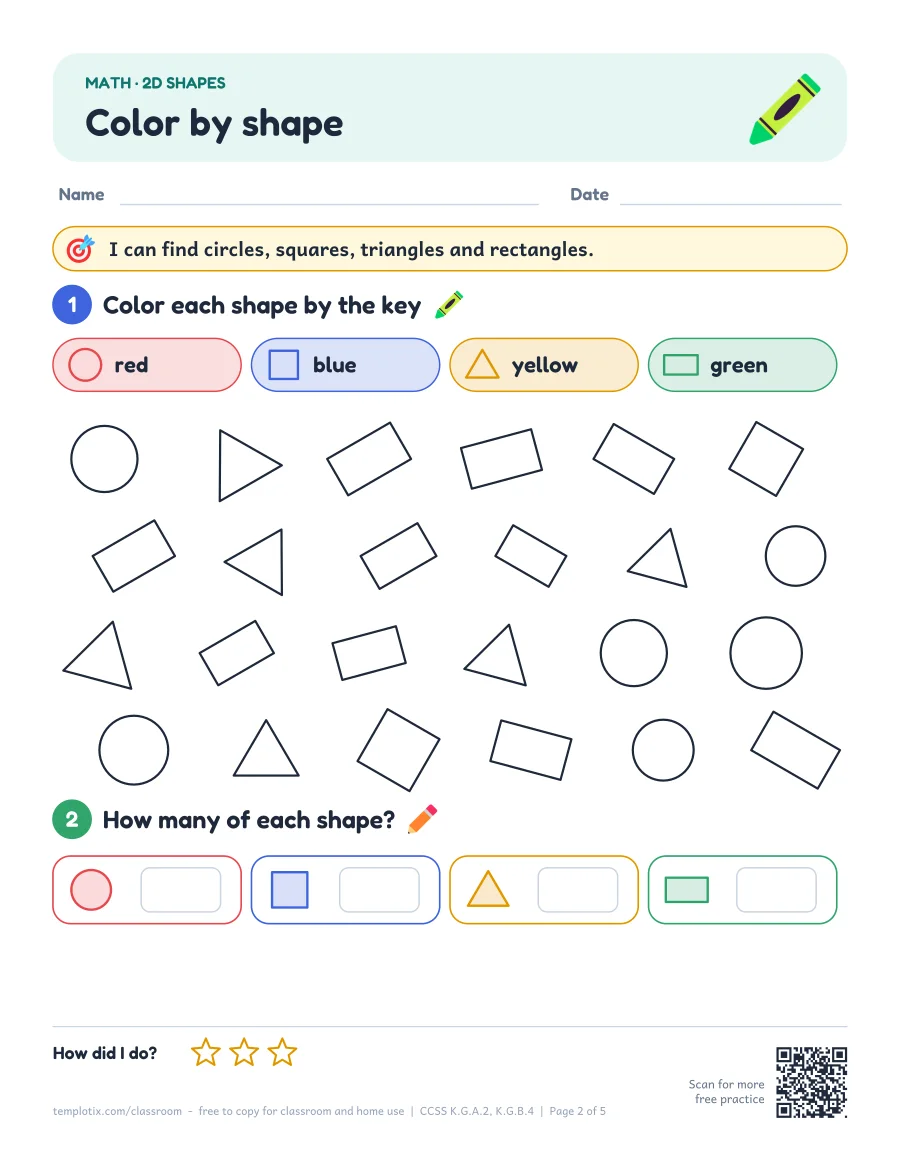
How to teach shapes
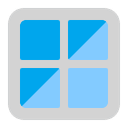
- Go on a shape hunt. Walk around the room and name the shapes you can see: a clock is a circle, a door is a rectangle, a ball is a sphere.
- Count with a finger. Touch each side, or each corner, and count aloud. Mark the first one so you know where you started.
- Hold real solids. Boxes, cans, balls and cones from the kitchen make the best 3D shapes. Children can feel the flat faces and the edges.
- Turn the shape. A square turned on its point is still a square. Turning shapes on the page stops children thinking a shape only looks one way.
More math
Common questions
What is the difference between 2D and 3D shapes?
A 2D shape is flat, like a square drawn on paper: it has length and width only. A 3D shape is solid, like a cube or a ball: it also has depth, so you can hold it and turn it around. The flat surfaces of a 3D shape are called faces.
What is a vertex?
A vertex is a corner, the point where two sides of a flat shape meet, or where edges of a solid shape meet. A triangle has 3 vertices and a cube has 8. The plural is vertices.
Is a square a rectangle?
Yes. A rectangle is any quadrilateral with 4 right angles. A square has 4 right angles and 4 equal sides, so it is a special kind of rectangle, and also a special kind of rhombus.
Can I copy these worksheets for my class?
Yes. The PDFs are free to print and photocopy for classroom and home use, in color or in the black-and-white ink saver. Please link to this page rather than re-uploading the files.