Shop
 Grade workbooks


Classroom · Science · Weather · Kindergarten and 1st grade

Types of weather worksheets
A free five-page science pack for Kindergarten and 1st grade: learn to name and describe different kinds of weather, with a labeled picture, practice pages, a hands-on experiment and an answer key.
The big idea
 The big idea
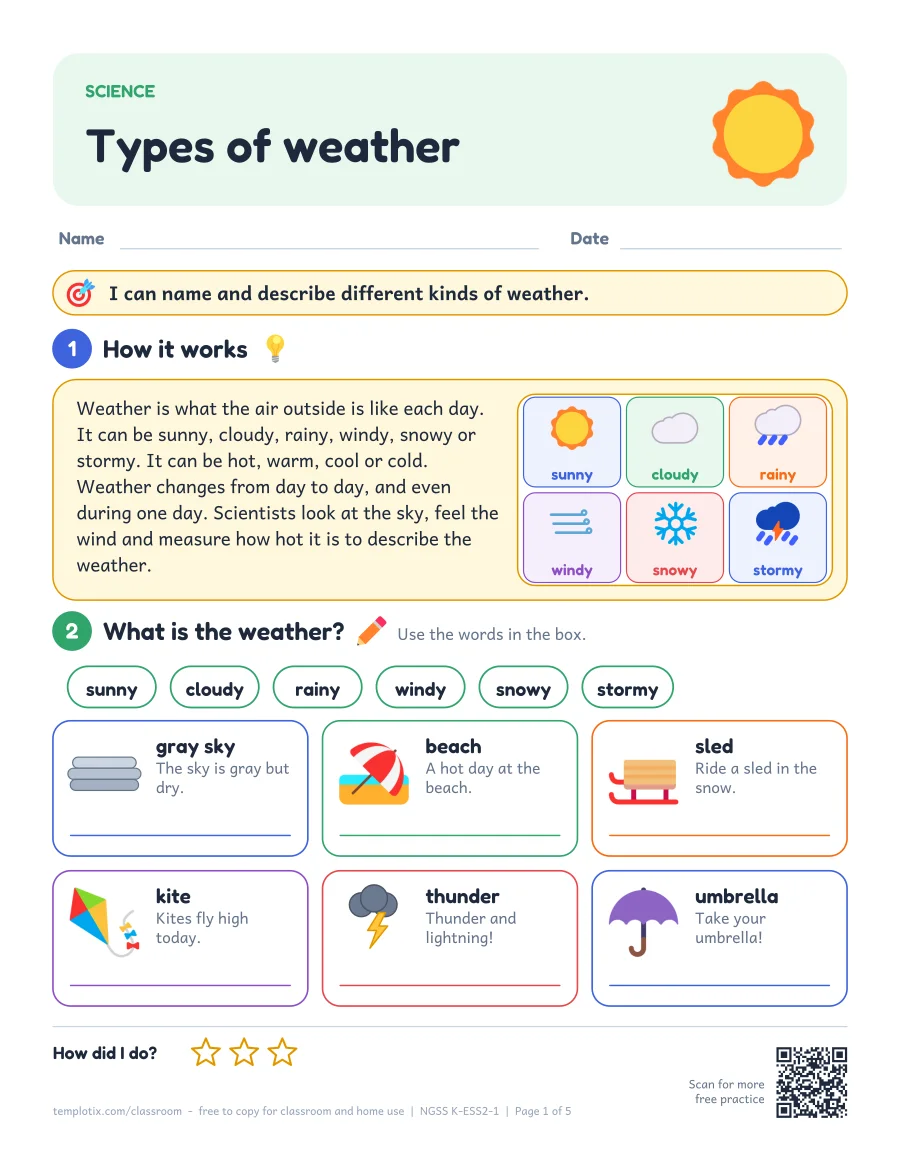
Weather is what the air outside is like each day. It can be sunny, cloudy, rainy, windy, snowy or stormy. It can be hot, warm, cool or cold. Weather changes from day to day, and even during one day. Scientists look at the sky, feel the wind and measure how hot it is to describe the weather.
Teaching tip
 Teaching tip
Make a class weather chart by the door and let a weather reporter choose the symbol each morning. After a month, count the symbols together and talk about the pattern.
Try it: weather watch week
 Try it: weather watch week
I can observe and record the weather.
You need
- A notebook
- A pencil
- A window
- A thermometer, if you have one
- Crayons
What to do
- 1Look outside at the same time each day for 3 days.
- 2Is it sunny, cloudy, rainy, windy, snowy or stormy?
- 3Draw a weather picture in the chart. Is it hot, warm, cool or cold?
- 4Keep going for a whole week if you can. Which weather did you see most?
Predict first: What weather will you see most?What happens?
Answers will vary with where you live and the time of year. Most children see the weather change within a few days. Counting the days of each kind of weather is how scientists find patterns, such as more rain in spring or more snow in winter.
Safety: watch storms from inside, away from windows. Never look straight at the sun.
Quick check
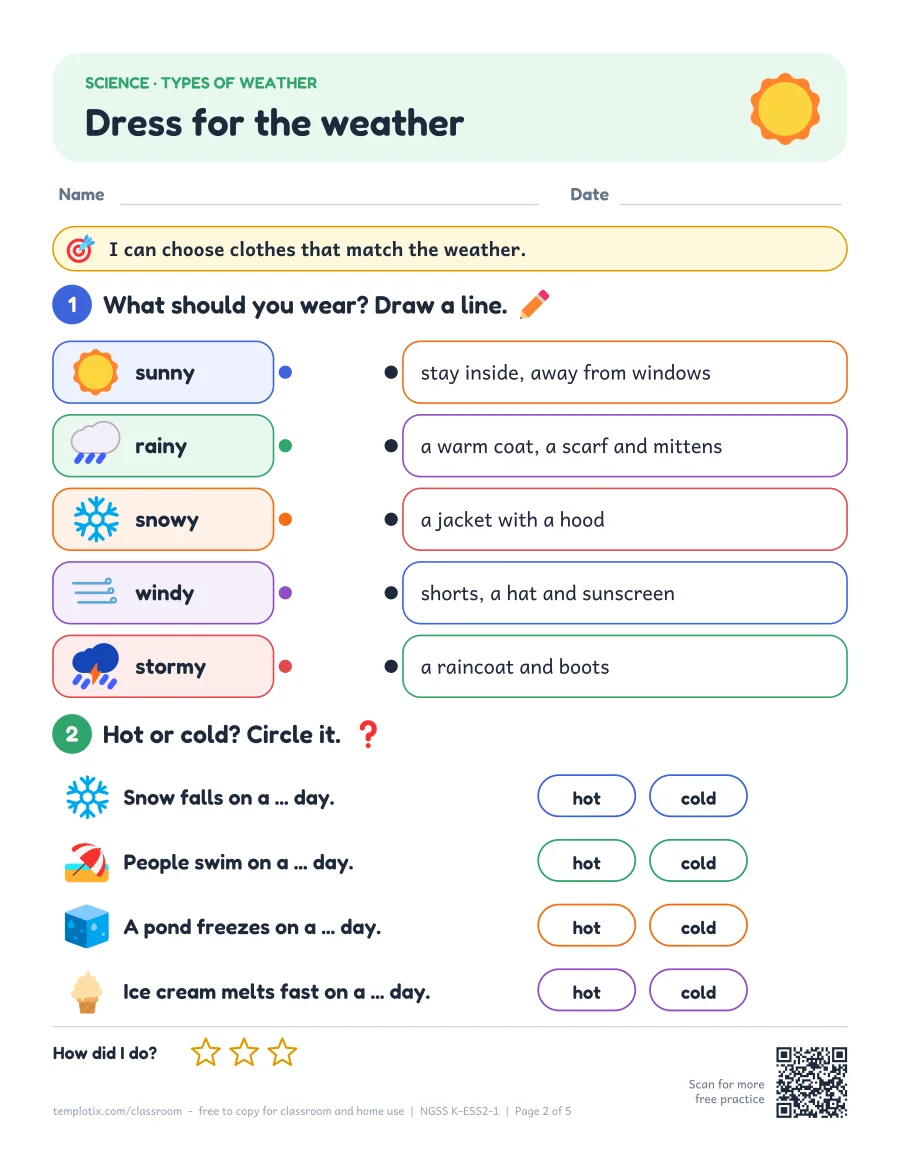
What do you wear on a rainy day?Tap to checkA raincoat and boots
What falls on a cold, snowy day?Tap to checkSnow
What kind of day is good for flying a kite?Tap to checkA windy day
What is a day with thunder and lightning?Tap to checkA stormy day
Is the weather the same every day?Tap to checkNo, it changes
What tool tells how hot it is?Tap to checkA thermometer
What the worksheets look like
Water cycle poster
 Water cycle poster
One colorful page with a labeled water cycle picture and the four steps: evaporation, condensation, precipitation and collection. Made for a science wall.
Common questions
What is the difference between weather and climate?
Weather is what the air is like today or this week. Climate is the usual weather of a place over many years. A desert can have a rainy day, but its climate is still dry.
How can kids observe the weather?
Look out the same window at the same time each day and record sun, clouds, rain, wind and how warm it feels. After two weeks, children can count the sunny days and look for patterns.
What grade learns types of weather?
Usually Kindergarten and 1st grade. In the Next Generation Science Standards (NGSS) it supports K-ESS2-1.
Is there a hands-on experiment?
Yes. Page 4 is a Try it! experiment, weather watch week, with a materials list, a prediction and an observation chart. Safety: watch storms from inside, away from windows. Never look straight at the sun.
Is there an answer key?
Yes. Page 5 has every answer from the pack, what to expect from the experiment and a short teaching tip.