Shop
 Grade workbooks


Charts and paper · kindergarten to 3rd grade
Free printable
Handwriting paper has three lines for each row: a top line, a dashed middle line and a base line. Tall letters reach the top, small letters stop at the dashed line, and tails hang below. Start with wide lines and move to narrower ones as letters get smaller.
6 versions below · color or ink saver · CCSS L.K.1.A, L.1.1.A
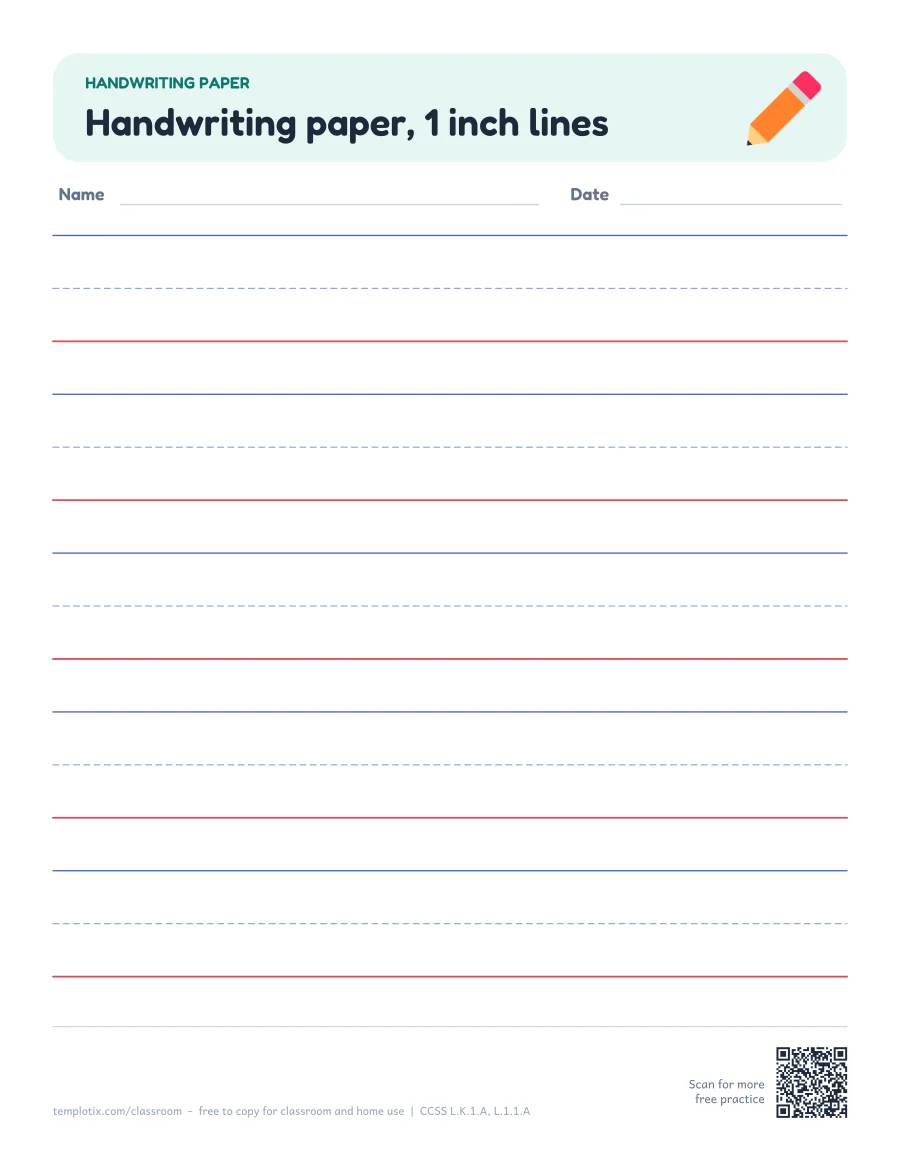
1 inch lines
The widest lines, for preschool and the start of kindergarten.
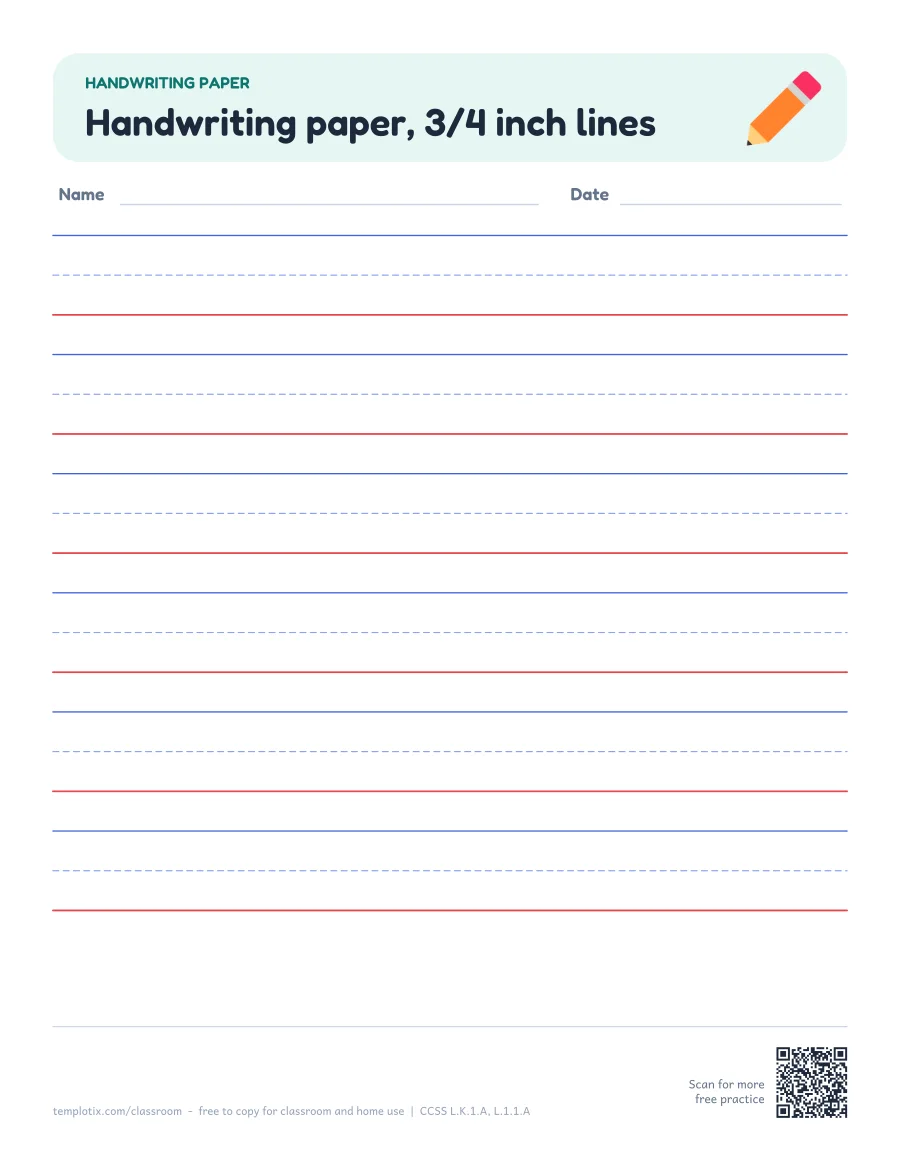
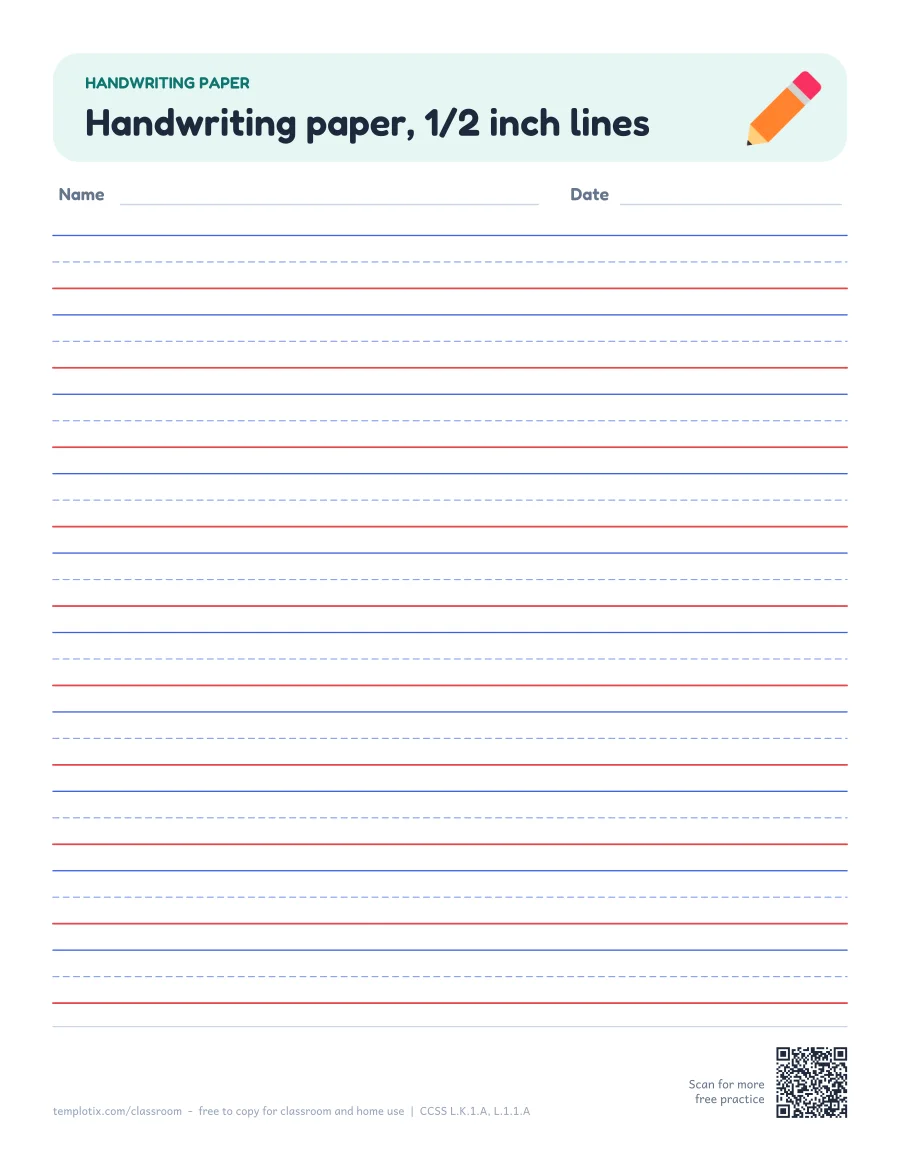
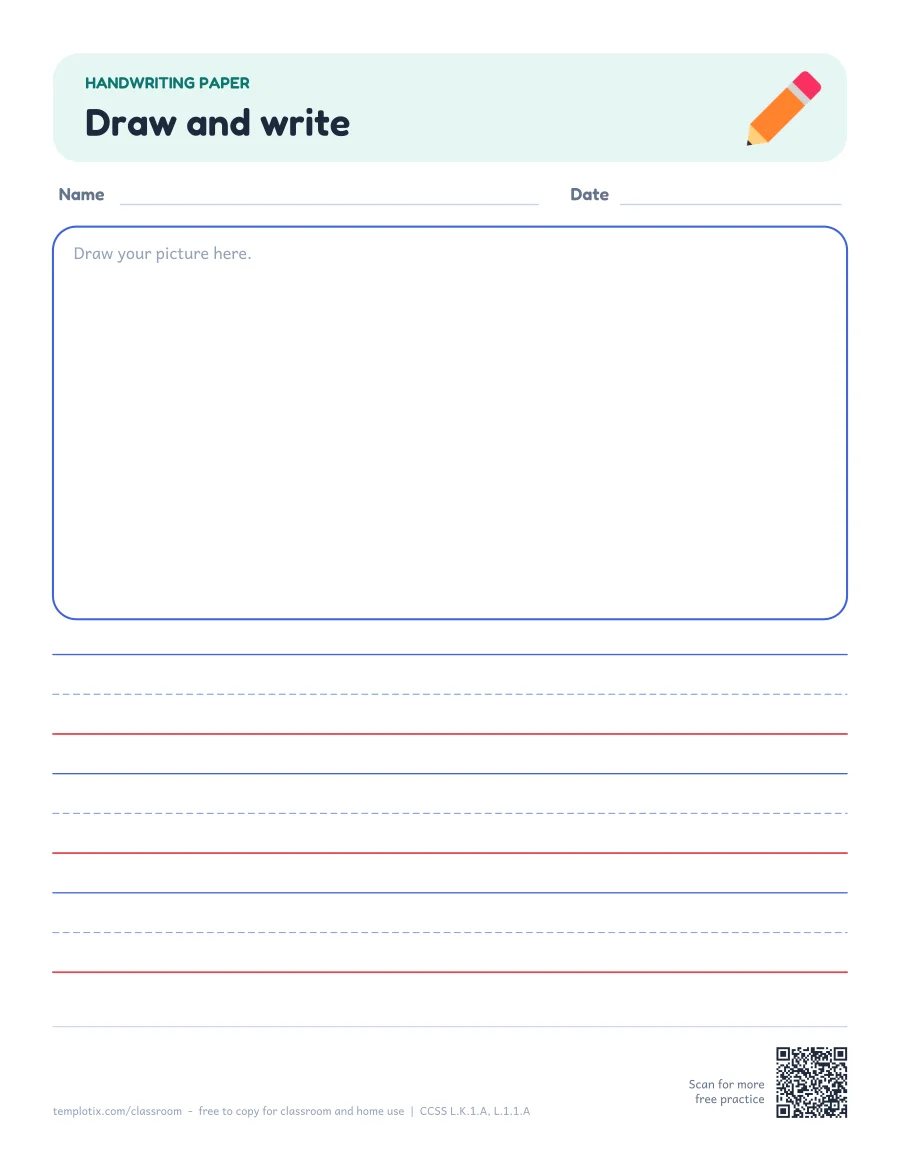
Kindergarten writing paper
A box to draw a picture at the top and wide lines to write about it.
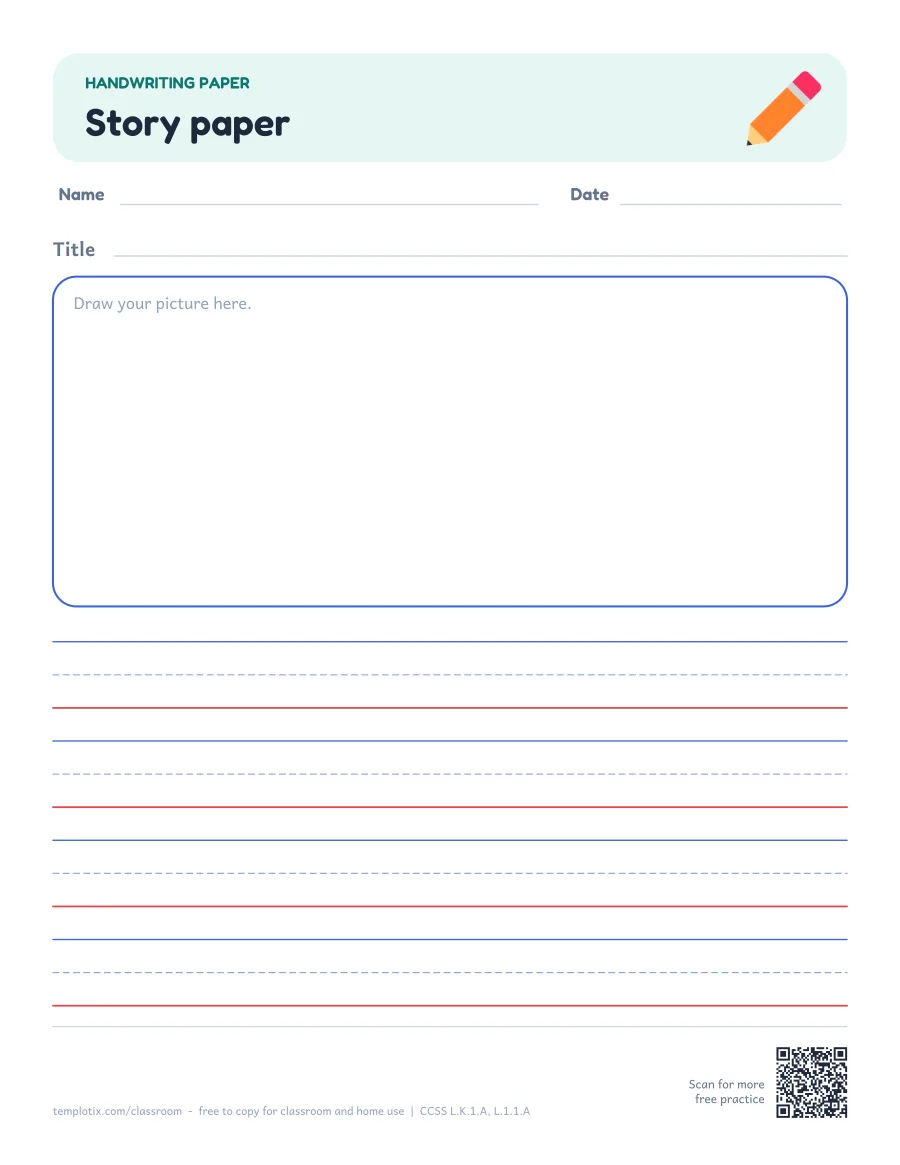
Story paper
A title line, a picture box and lines for a short story.
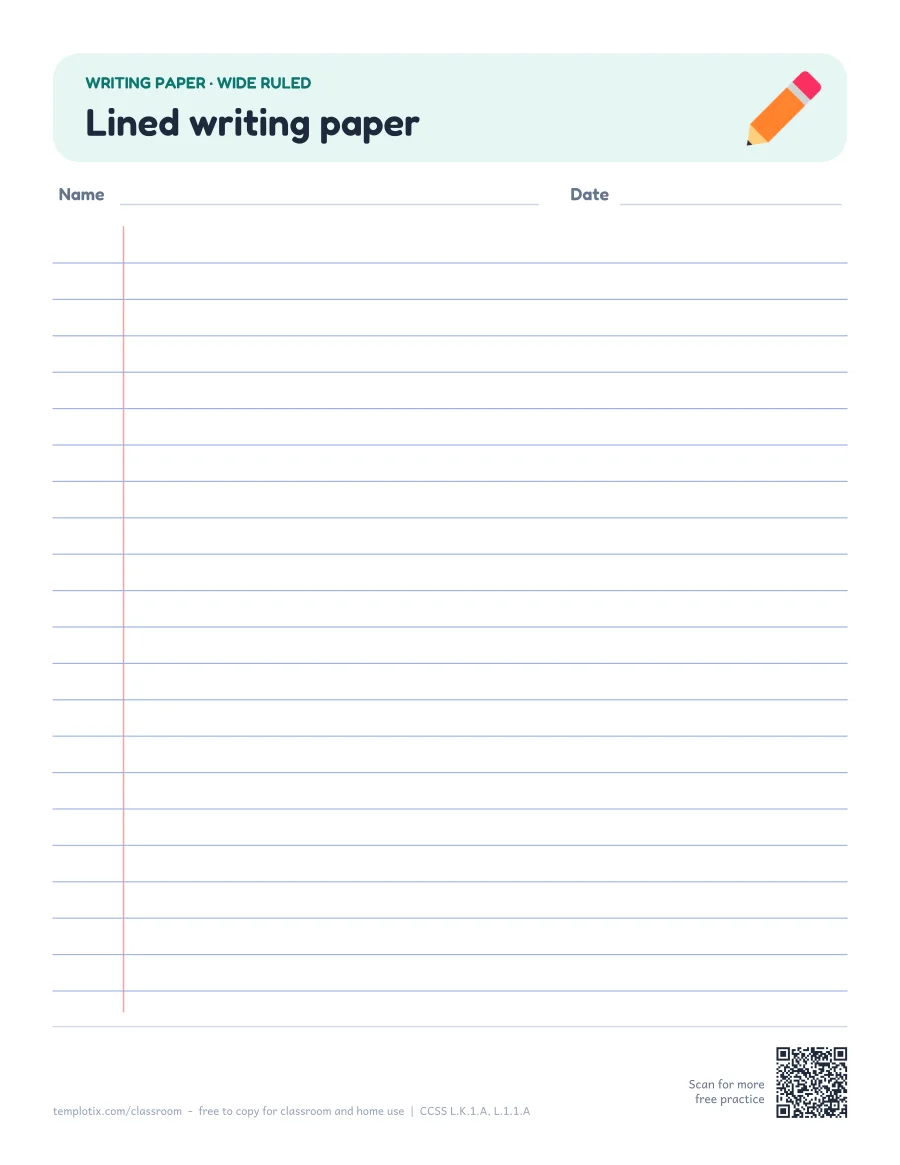
Lined writing paper
Wide ruled lines with a margin, for 3rd to 5th grade.
How to use handwriting paper
 How to use handwriting paper
- 1Pick the line size. Use 1 inch lines for beginners, 3/4 inch in kindergarten and 1st grade, and 1/2 inch from about 2nd grade.
- 2Show the three lines. Tall letters like b and l touch the top line. Small letters like a and o stop at the dashed line. Tails like g and y go below the base line.
- 3Write a word, then a sentence. Copy a name or a word first. When that is easy, write a whole sentence with a space between words.
- 4Draw, then write. On the kindergarten paper, draw first and write about the picture underneath: the picture gives a child something to say.
More reading and writing for kindergarten to 3rd grade
Common questions
What size handwriting paper does kindergarten use?
Most kindergartens use lines about 3/4 inch to 1 inch high, with a dashed middle line. Children move to narrower lines in 1st and 2nd grade as their letters get smaller and neater.
What are the three lines on handwriting paper?
The top line, the dashed middle line and the base line. Every letter sits on the base line. Tall letters reach the top line and small letters reach the dashed middle line.
What is primary writing paper?
It is another name for handwriting paper with a dashed middle line, made for children in the primary grades, kindergarten to 3rd grade.
What is wide ruled paper?
Wide ruled paper has plain lines about 11/32 inch apart, with no middle line. Children usually move to it in 3rd or 4th grade.