Shop
 Grade workbooks


Fine motor · Cutting practice · 3 free PDFs

Cutting practice
Cutting is a two-handed skill: one hand works the scissors while the other turns the paper. These pages build it in small steps. Every line starts at the edge of the page, so a child can begin cutting right away, and ends at a picture, so they know where to stop.
Level 1 · Preschool and kindergarten
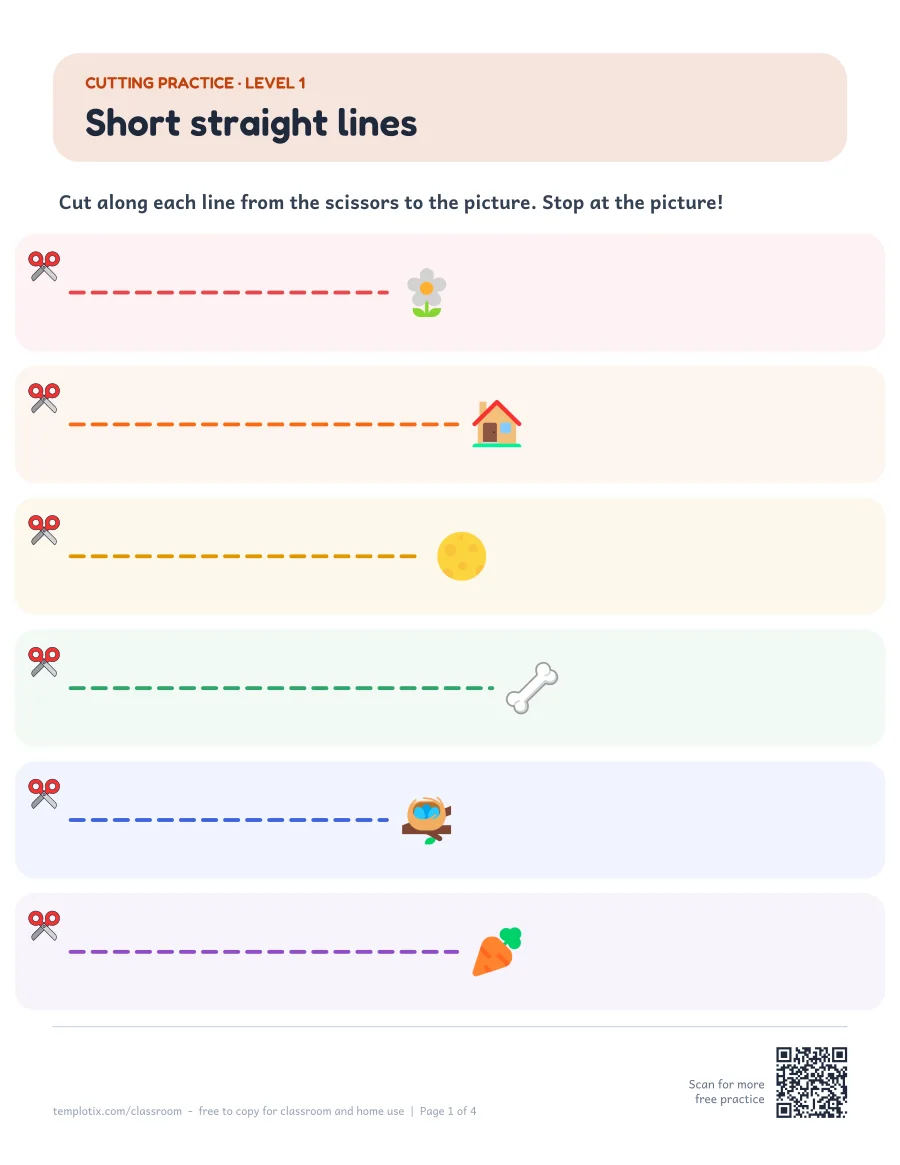
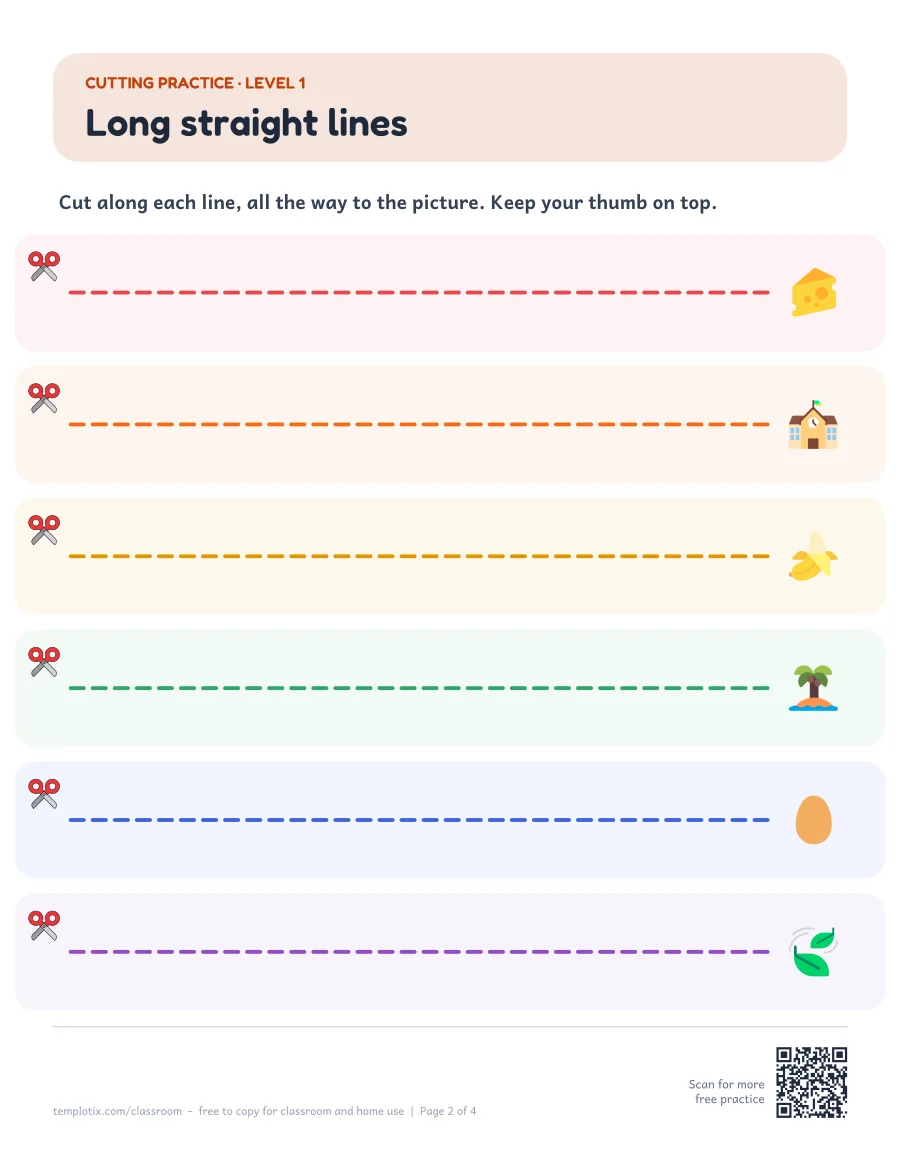
Cutting straight lines
Short lines first, then long ones, slanted ones and lines with corners. Each line starts at the edge of the paper and ends at a picture.
Level 2 · Preschool to 1st grade
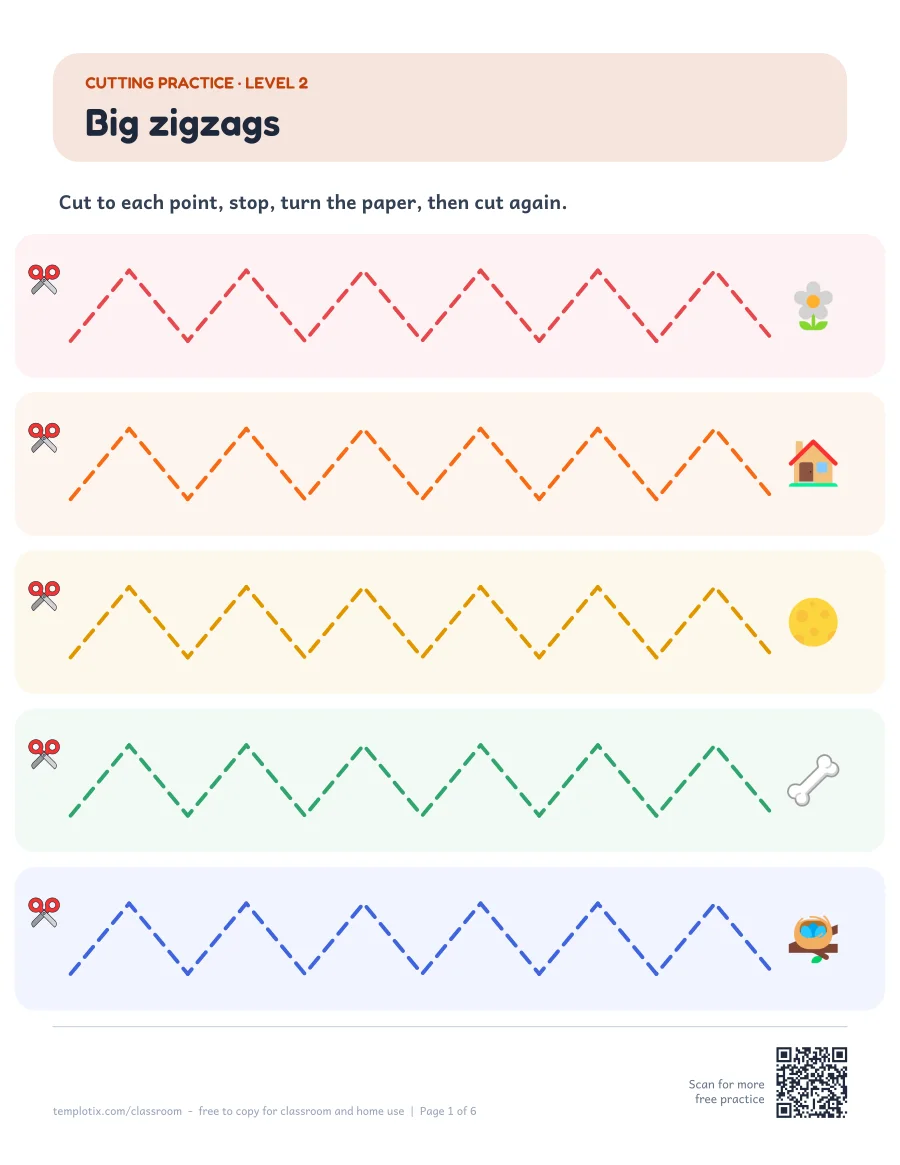
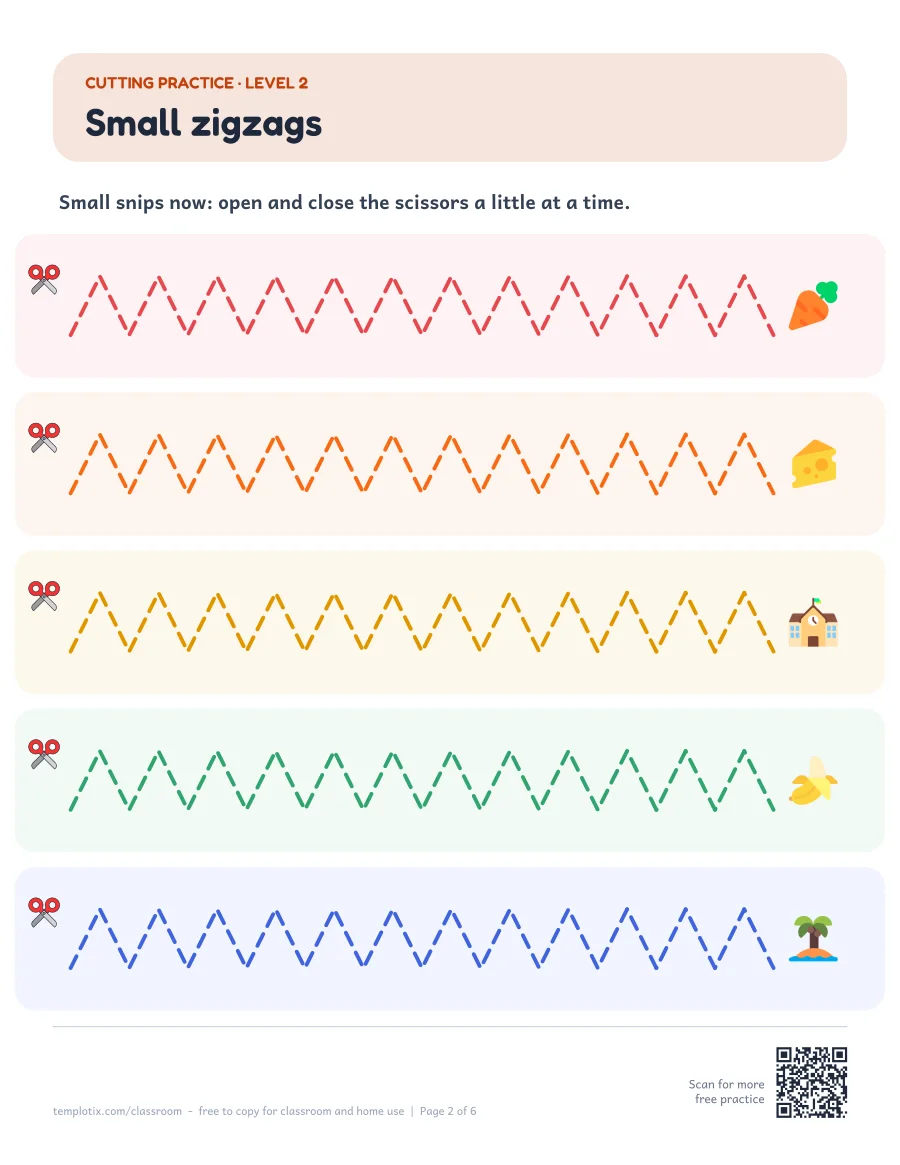
Cutting zigzags, waves and curves
Zigzags, waves, hills and castle walls: lines that turn, so the helper hand has to turn the paper.
Level 3 · Kindergarten and 1st grade
Cutting shapes, a spiral and strips
Cut out eight big shapes, one spiral that turns into a spinning snake, and eight strips for a paper chain.
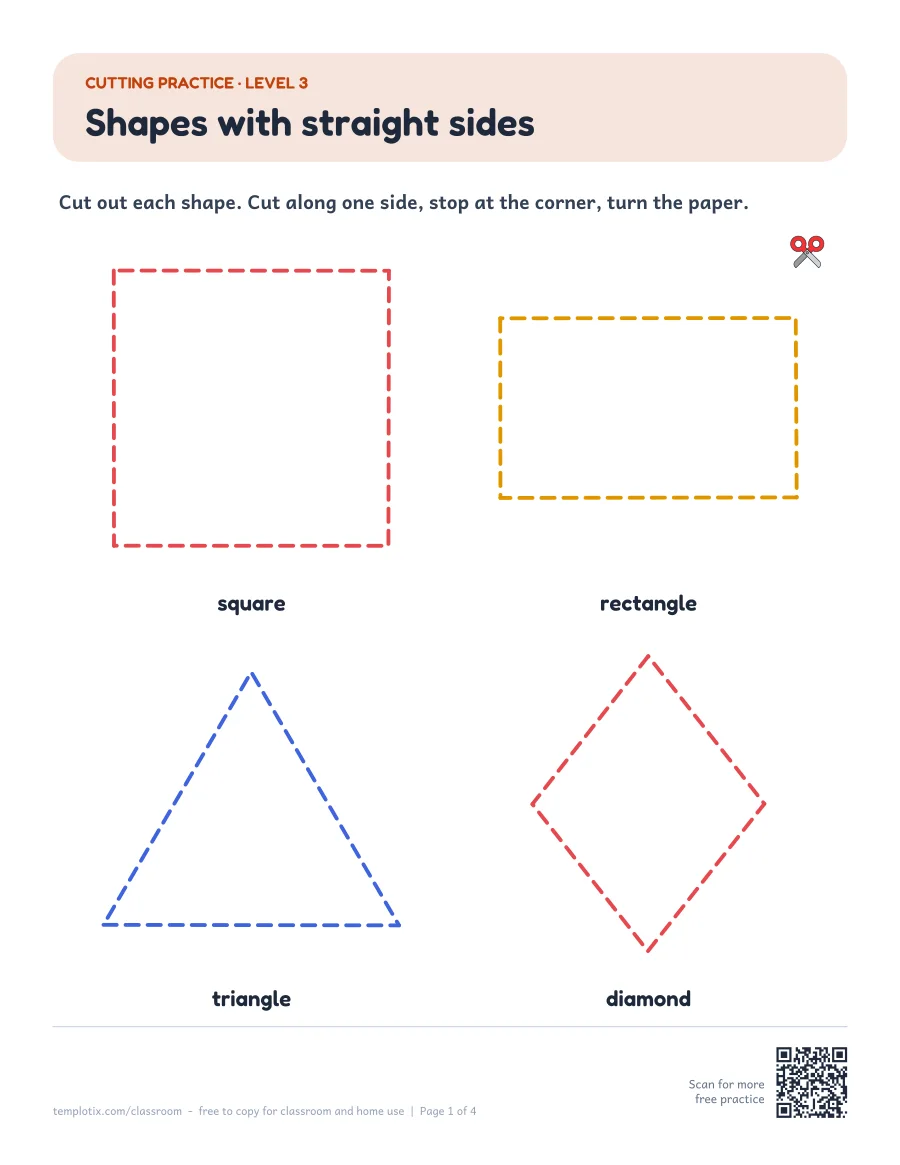
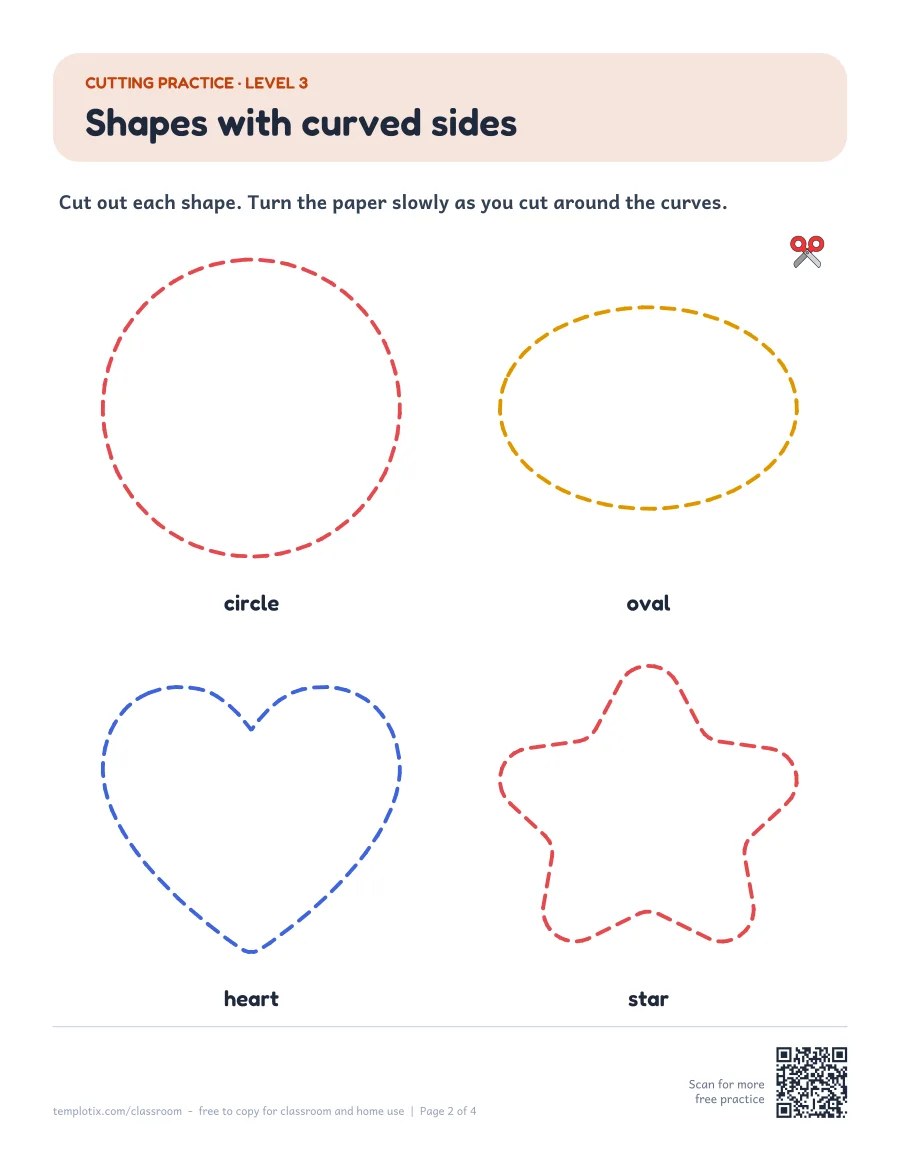
How to use these pages
- Use child-safe scissors, and stay with your child while they cut.
- Thumb in the small hole and on top. The other hand holds the paper, also thumb on top.
- Start at the scissors picture on the edge of the page and cut along the dashed line.
- Stop at the picture. For corners and curves, turn the paper, not the scissors.
What children practice
 What children practice
- Opening and closing scissors with one hand
- Using both hands together
- Hand-eye coordination
- Stopping at a mark and turning at a corner
More fine motor practice
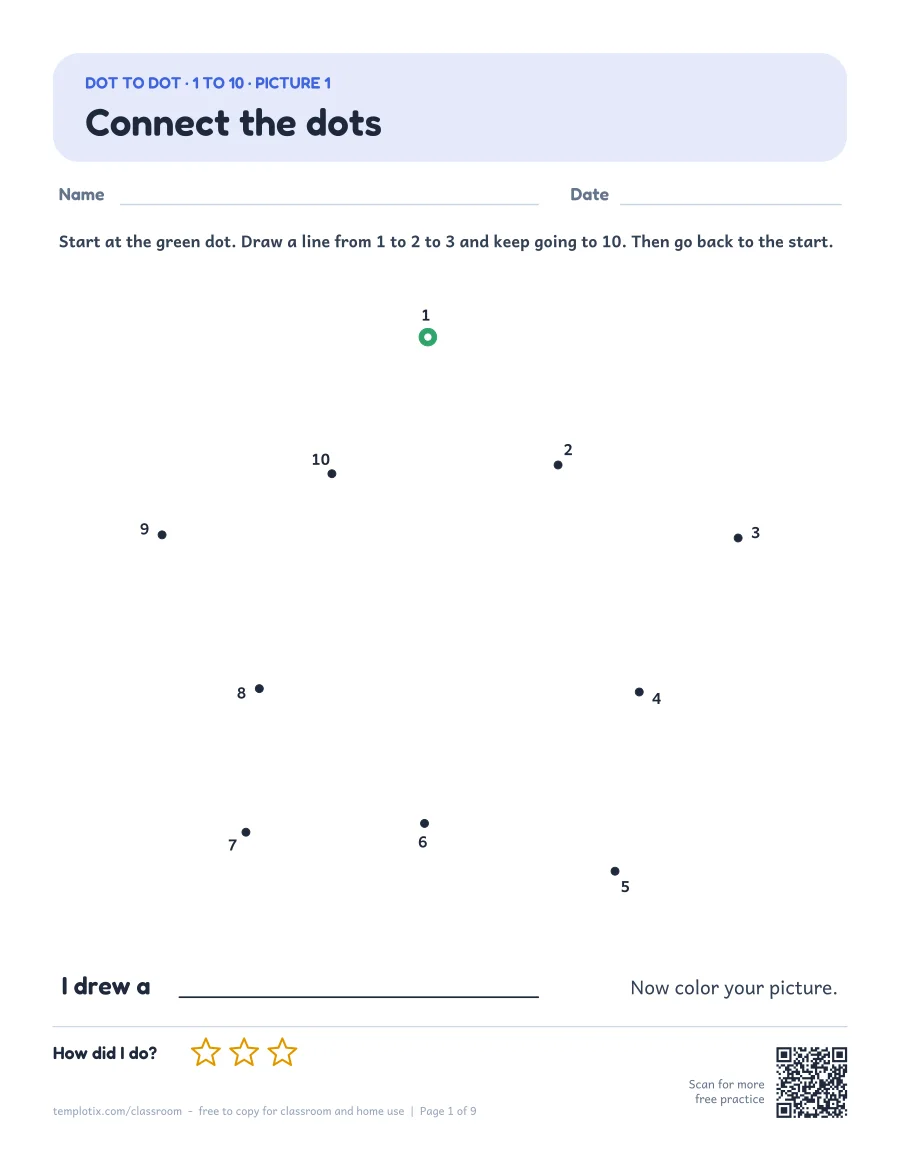 Dot to dot printables5 PDFs · 41 pages
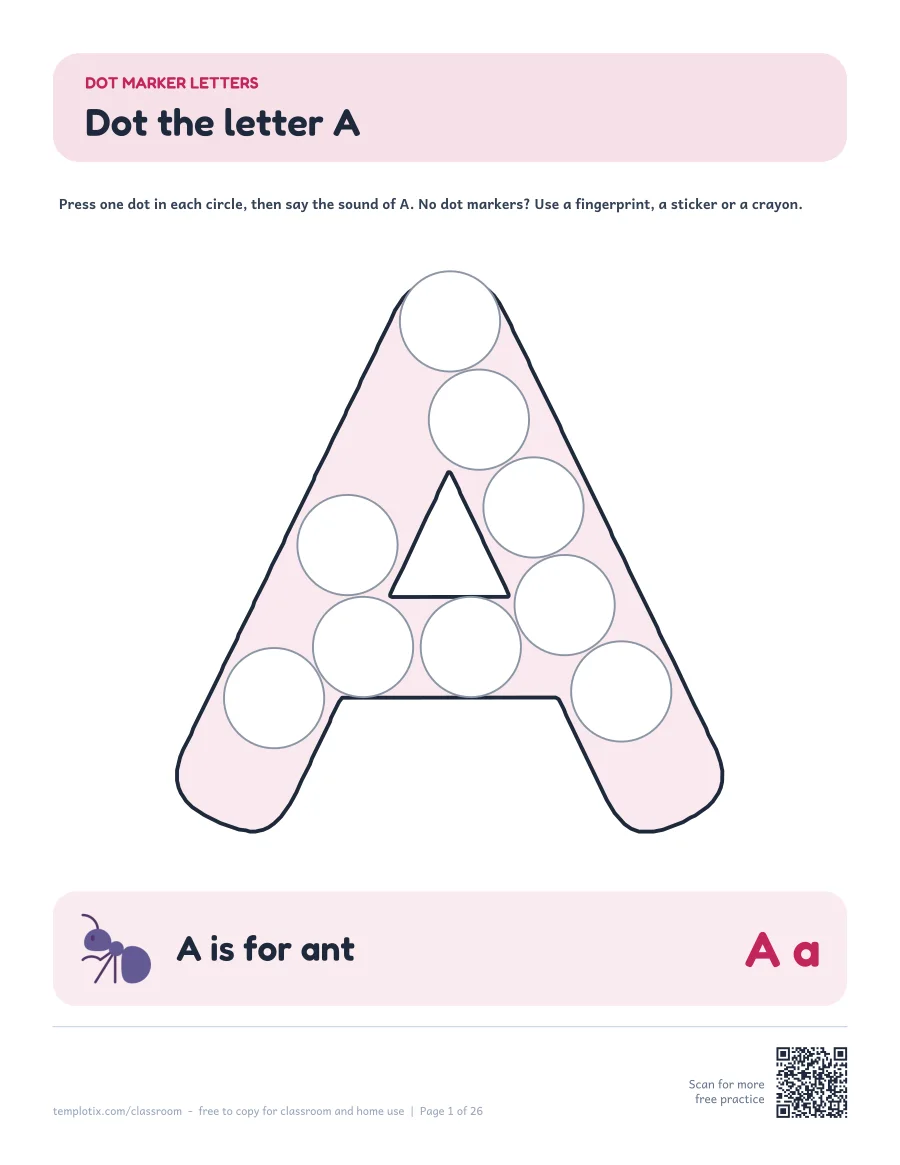 Dot marker printables3 PDFs · 46 pages
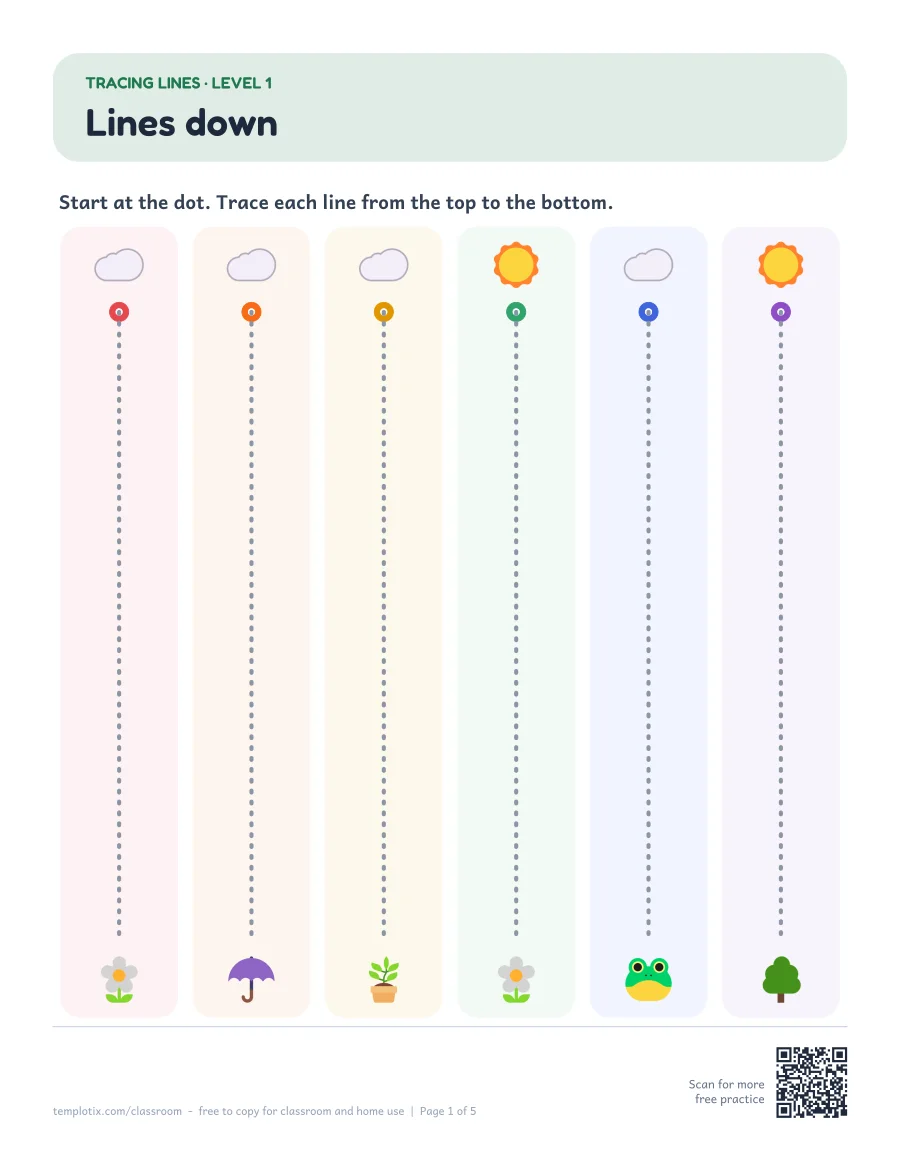 Tracing lines worksheets3 PDFs · 19 pages
Common questions
At what age can children start cutting practice?
Many children can snip the edge of paper at about age 2 to 3 and cut along a straight line at about 3 to 4. Curves and simple shapes usually come at 4 to 5, and harder shapes at 5 to 6. Start with level 1 and move on when the lines are easy.
In what order should I teach cutting?
Short straight lines first, then long straight lines, slanted lines and corners. Next come zigzags and curves, and last closed shapes such as circles and squares. The three PDFs follow that order.
What scissors should a child use?
Small scissors with rounded tips that fit a child's hand. Left-handed children cut much more easily with left-handed scissors. Always supervise.
Is cutting practice safe at home?
Yes, with child-safe scissors and an adult nearby. Teach two rules from the first day: scissors cut paper only, and we sit down to cut.
All fine motor worksheetsPrintable templates to cut outShape templatesShapes worksheets
Free to print and copy for classroom and home use. 14 pages in all. Pictures based on Microsoft Fluent Emoji (MIT license).